If you love architecture, Central Phoenix offers something rare: a group of historic districts where design history is still part of daily life. You are not just looking at old homes from a distance. You are walking streets where bungalows, Tudor Revival houses, Spanish Colonial details, and early ranch forms sit close to arts districts, restaurants, museums, and major employment centers. If you want to understand which historic district fits your eye and your lifestyle, this guide will help you compare the character, architecture, and preservation realities across Midtown and the central city. Let’s dive in.
Why Central Phoenix Stands Out
For architecture lovers, Central Phoenix is compelling because its historic neighborhoods are not isolated from the rest of the city. The Central City Village planning framework describes downtown as Phoenix’s urban center and highlights areas like Roosevelt Row and Grand Avenue as walkable arts districts with galleries, shops, restaurants, bars, and street art.
That urban context matters. You can admire historic architecture while still living near cultural venues, business centers, and educational and medical employers. In practical terms, these districts offer preservation, design interest, and access to the active core of Phoenix.
The city’s residential historic district resources show that Roosevelt, Willo, Encanto-Palmcroft, F.Q. Story, and Coronado create a historic ring around the center of the city. For a buyer with an architectural lens, that means you have several distinct options rather than one single historic enclave.
Roosevelt: The Broadest Style Mix
Roosevelt is generally bounded by McDowell Road, Fillmore Street, Central Avenue, and Seventh Avenue, with a period of significance from 1895 to 1930, according to the city’s historic district listing. Phoenix describes it as one of the city’s most intact historic areas.
Architecturally, Roosevelt offers one of the widest style ranges in Central Phoenix. You will find Queen Anne, vernacular Neoclassical Revival, Bungalow, Period Revival, Prairie School, and Moderne influences in one district. That makes Roosevelt especially appealing if you want to see a broad sweep of early Phoenix residential design rather than a single dominant style.
The district also carries the feel of a streetcar suburb, with landscaped streets, mature palms, and historic landmarks woven into the neighborhood fabric. If your taste leans toward architectural variety and early-city character, Roosevelt is often the best place to begin.
Willo: Cohesive and Tree-Lined
Willo is generally bounded by First and Seventh avenues, McDowell Road, and the alley north of Edgemont Avenue, with a period of significance from 1910 to 1950, according to the city’s historic district information. It sits close to downtown while maintaining a distinct residential identity.
The neighborhood includes Craftsman bungalows, period revival homes, 1950s ranch houses, and Moderne examples. What makes Willo stand out is not just the mix of architecture, but the way the homes read together. The city notes regular setbacks and parkway tree plantings, which give the district a unified streetscape.
If you are drawn to neighborhoods that feel visually consistent and easy to explore on foot, Willo often feels especially coherent. It also offers a strong sense of transition between historic residential blocks and the larger Midtown and downtown setting.
Encanto-Palmcroft: Picturesque Planning and Revival Styles
Encanto-Palmcroft is generally bounded by Seventh to 15th avenues, McDowell Road, and the northern boundary of Encanto Park and Golf Course. The city identifies its period of significance as 1920 to 1952 in the historic district register.
This district is especially appealing if you care as much about neighborhood planning as individual houses. A city planning update notes that the area has roughly 330 homes, most built in the 1930s and 1940s, and its winding streets reflect a more picturesque suburban design idea.
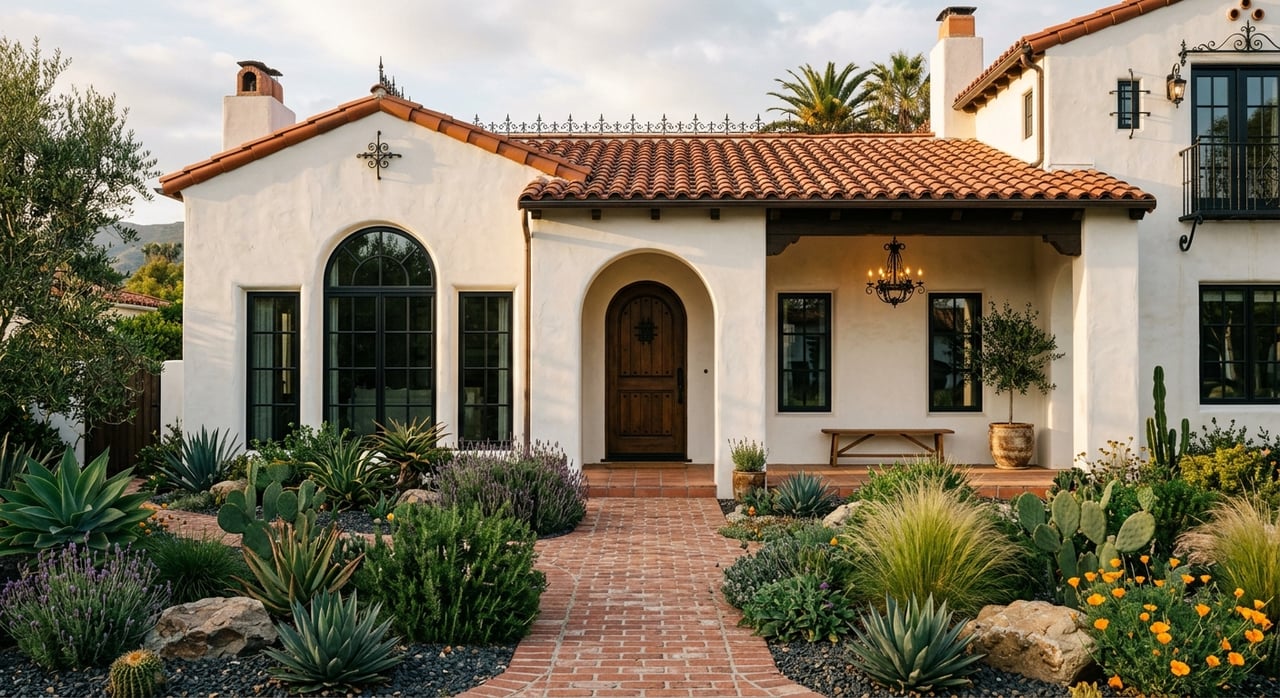
The architecture includes Spanish Colonial, Tudor Revival, Cape Cod, ranch, Mediterranean, and Monterey Revival homes. Combined with its relationship to nearby Encanto Park, the district often feels softer and more park-oriented than some of the gridded neighborhoods closer to downtown.
F.Q. Story: Revival Character and Craftsmanship
F.Q. Story is generally bounded by McDowell Road, Roosevelt Street, Seventh Avenue, and 17th Avenue, with a period of significance from 1921 to 1942, according to the city’s district descriptions.
For many architecture enthusiasts, F.Q. Story feels especially cohesive because of its strong revival identity. The neighborhood association’s architecture overview notes a collection of Spanish Colonial Revival, English Tudor, Craftsman bungalows, and transitional ranch homes, with Tudor Revival playing a major role in the district’s visual character.
If you appreciate craftsmanship, rooflines, masonry detail, arched openings, and a strong sense of period design, F.Q. Story is worth close attention. It offers one of the clearest architectural narratives among Central Phoenix historic districts.
Coronado: A Layered Architectural Timeline
Coronado is generally bounded by Seventh to 14th streets, Virginia Avenue, and the alley north of McDowell Road, with a period of significance of 1907 to 1942, according to the city’s historic district register.
The area developed over time from early agricultural land into a neighborhood shaped in part by trolley-era growth. That long evolution helps explain Coronado’s wide stylistic mix. City sources identify bungalow, Craftsman bungalow, Period Revival, Spanish Colonial Revival, Art Moderne, and ranch homes, while broader planning documents also reference English Tudor, Southwest, Pueblo Revival, and early ranch contributors.
For buyers who want variety without losing a strong historic identity, Coronado can be especially appealing. It offers a layered residential story that reflects several eras of Phoenix growth within one district.
How to Choose by Architectural Taste
If you are comparing districts through a design lens, it helps to focus on what kind of visual experience you want.
- Choose Roosevelt if you want the broadest overview of early Phoenix residential styles.
- Choose Willo if you want a more unified streetscape with tree-lined setbacks and a calm residential feel near downtown.
- Choose Encanto-Palmcroft if you are drawn to winding streets, revival architecture, and a park-oriented setting.
- Choose F.Q. Story if you love strong Tudor and Spanish Colonial Revival character with a clear sense of craftsmanship.
- Choose Coronado if you want a layered mix of bungalow, revival, Moderne, and early ranch architecture.
The city also identifies additional nearby districts such as Garfield, North Garfield, East Evergreen, Villa Verde, and Windsor Square in the broader central Phoenix orbit through its residential historic districts page. These are useful to know if your search expands east or north of the core group.
Preservation Rules Every Buyer Should Know
Buying in a historic district does not mean you cannot make changes. It does mean exterior work is reviewed through a preservation process. The city’s Historic Preservation Office guidance explains that listed properties are subject to special review, and permit applications affecting exteriors may require a Certificate of Appropriateness or Certificate of No Effect.
According to the city’s approvals and guidelines, review applies to exterior demolition and other exterior alterations on listed properties. That can include additions, porch work, roof changes, window replacement, and visible infill.
For design-minded buyers, this is an important distinction. Historic ownership is not a no-change rule. It is an exterior-change-with-review system intended to keep work compatible with the property or district’s historic character.
Incentives for Sensitive Rehabilitation
Phoenix also offers programs that support thoughtful preservation. The city’s Exterior Rehabilitation Grant Program provides a 50/50 matching structure for eligible homes in city-designated historic districts or for individually listed properties, with awards ranging from $5,000 to $20,000 per project.
Eligible work may include roofs, masonry or stucco, windows and doors, porches, steps, garage or carport rehabilitation, and reversing inappropriate alterations. The city states that successful projects should retain original historic fabric and character-defining architectural elements.
For larger projects, Phoenix also outlines broader tools through its historic preservation incentive programs, including the Demonstration Project Program, Adaptive Reuse Program, an Arizona property tax reduction program for qualifying historic properties, and the federal 20 percent rehabilitation tax credit for certified projects.
Lifestyle Beyond the Architecture
Historic appeal is only part of the story. Phoenix’s local district and food map resources identify Roosevelt Row, Grand Avenue, and Melrose as nearby areas tied to galleries, restaurants, shops, and antiques.
That means your day-to-day experience can include more than preserved streets and period details. Depending on the district, you may also be close to arts programming, dining, retail, museums, and major employment centers within Midtown and downtown Phoenix.
For many buyers, that combination is the real draw. You are not choosing historic architecture in isolation. You are choosing design, context, and a more layered urban lifestyle.
What This Means for Your Search
If you are shopping Central Phoenix for architecture, the right fit often comes down to how you balance style, setting, and renovation goals. Some buyers want the broad style spectrum of Roosevelt. Others want the visual cohesion of Willo or F.Q. Story, or the picturesque planning of Encanto-Palmcroft.
Just as important, you should evaluate how comfortable you are with preservation review and what kind of updates a property may need. A well-chosen historic home can offer design depth that is difficult to replicate, but it rewards a buyer who appreciates stewardship as much as aesthetics.
If you are considering a historic home in Midtown or the central city, Luxe Client Group brings a design-led perspective to architecturally significant properties and can help you evaluate both the home itself and the opportunities around it.
FAQs
Which Central Phoenix historic district has the widest range of architecture?
- Roosevelt is often the strongest choice if you want the broadest mix of styles, including Queen Anne, Bungalow, Prairie School, Period Revival, and Moderne.
Which Central Phoenix historic district feels most visually cohesive?
- Willo and F.Q. Story are often seen as especially cohesive because each has a strong, readable streetscape and a consistent architectural identity.
Which Central Phoenix historic district feels most park-oriented?
- Encanto-Palmcroft stands out for its winding streets and its proximity to Encanto Park, which contribute to a more picturesque setting.
What should buyers know about renovating a historic home in Phoenix?
- Exterior changes in Phoenix historic districts may require review for compatibility with the property or district, so buyers should plan for a preservation approval process before making visible exterior alterations.
Are there financial incentives for restoring historic homes in Phoenix?
- Yes. Phoenix offers an exterior rehabilitation grant program for eligible properties, and the city also notes state and federal preservation incentives for qualifying projects.