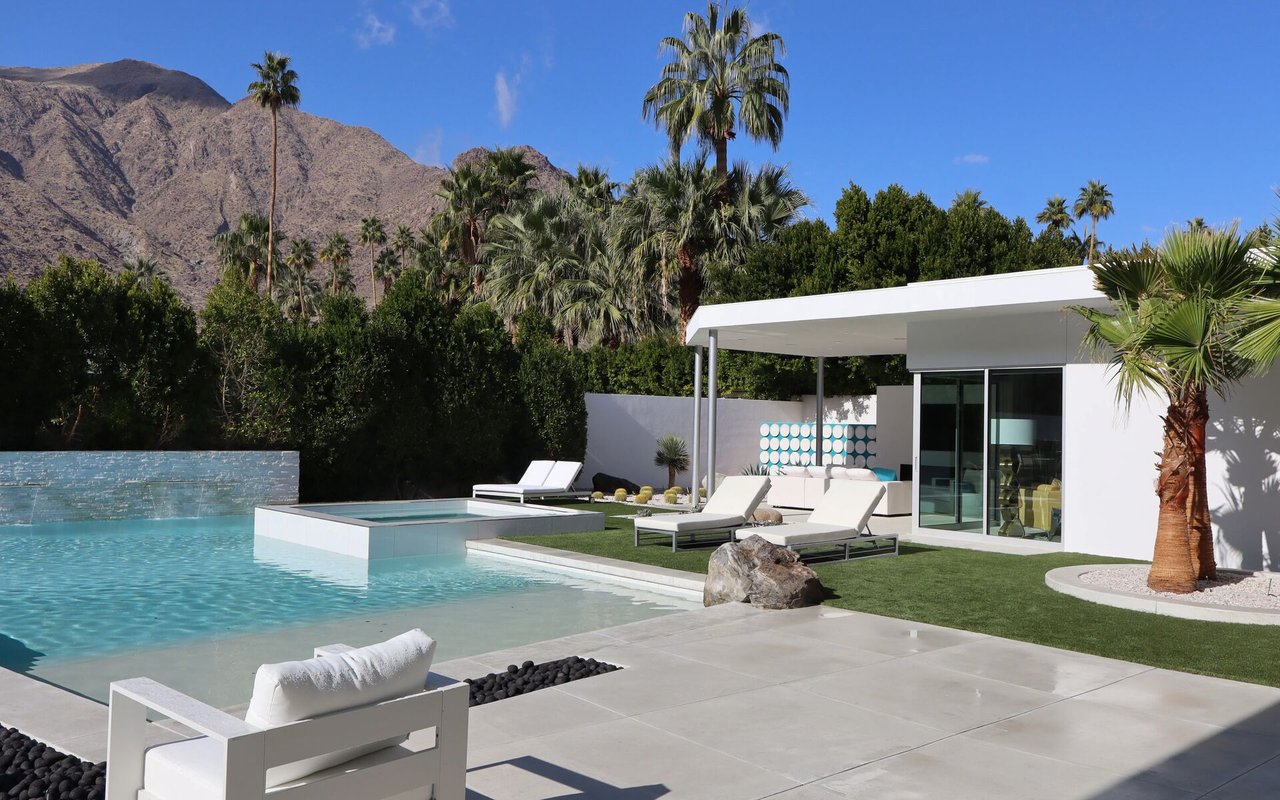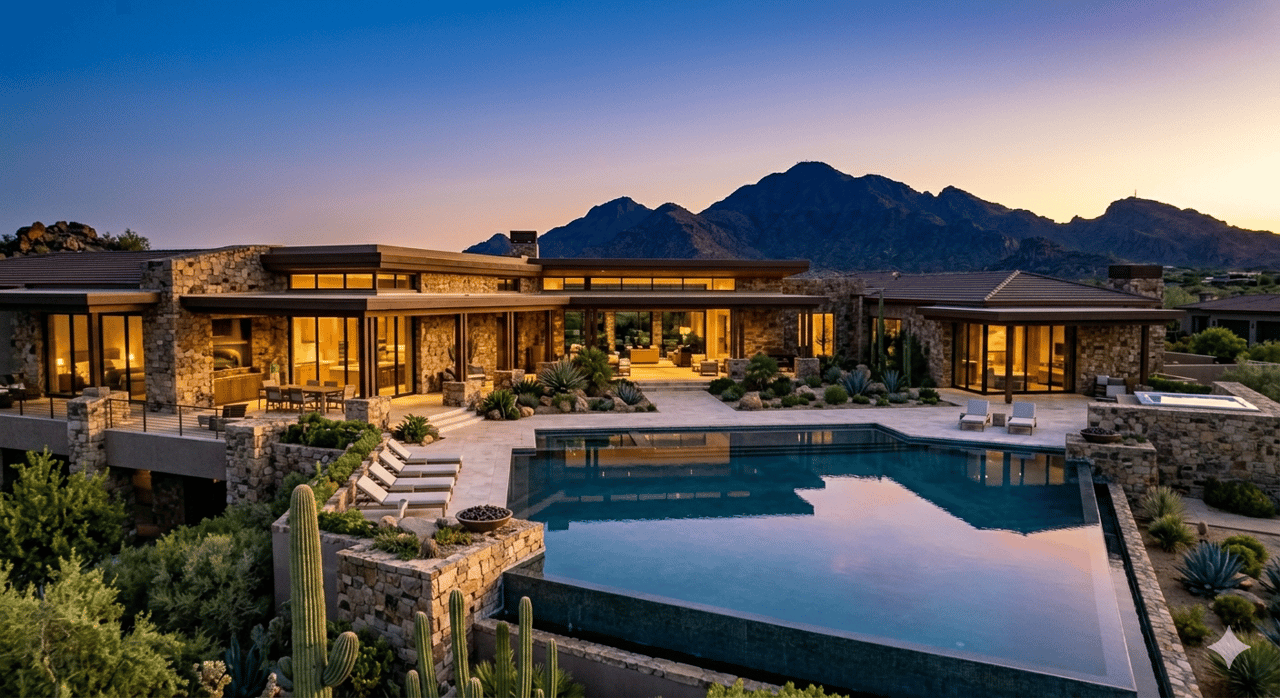
The buyers who pause, or worse, step back from the market entirely, are frequently doing so because of a conversation about mortgage rates. They are asking the right question in the wrong context. For buyers operating in the $3 million and above segment in Scottsdale and Paradise Valley, the rate discussion is almost never the most relevant financial lens through which to evaluate a purchase decision.
This is not a dismissal of financing costs. It is a reframe. The relevant question for this buyer is not what the rate is today. It is what the delayed purchase actually costs.
The True Cost of Waiting
Waiting for rates to move in a favorable direction has a price. That price is rarely calculated clearly. Consider the buyer who defers a purchase at $4 million while rates settle, expecting to reenter the market six to twelve months later. During that window, the property they intended to purchase either sells to someone else, returns to the market with adjusted pricing, or is no longer available. The estate that genuinely fit their criteria, the lot, the orientation, the finishes, the location within the corridor they wanted, does not hold. It transacts.
Paradise Valley carries roughly 100 active move-in-ready resale listings in 2026, alongside a growing wave of new construction at dramatically higher price-per-square-foot figures. The supply of genuinely aligned, turnkey estate properties at any given price band is narrower than the raw inventory numbers suggest. When the right property appears, the replacement is rarely equivalent.
Wealth Preservation and the Real Calculus
For the high-net-worth buyer considering a $3M to $6M acquisition in this market, the financial question is more accurately framed around opportunity cost and wealth positioning than around rate sensitivity. Luxury real estate at this tier in Paradise Valley and Scottsdale has demonstrated durable value over time, driven by land scarcity, zoning constraints, and the quality of the buyer pool. The depreciation risk that concerns buyers in other segments simply behaves differently here.
Equity-rich buyers, including the significant share who are relocating from coastal markets with substantial proceeds, are often weighing a real estate purchase against capital sitting in other asset classes. The calculation is not rate-driven. It is allocation-driven. What is the cost of holding that capital outside a tangible asset in this market, in this location, in this cycle?
The Conversation Our Clients Are Actually Having
The most sophisticated buyers we work with are not asking us whether rates will improve before spring ends. They are asking whether the estate in front of them represents an aligned acquisition at a price that reflects current reality. If the answer is yes, and the property fits the lifestyle, the lot, the long-term hold strategy, then the rate is a detail to be managed, not a reason to disengage.
Our role is to provide the market context that makes that assessment accurate. That includes honest guidance on pricing, on what comparable properties have sold for privately and publicly, and on whether the value proposition of a specific estate holds up to scrutiny. That is the conversation that matters. The rate will do what it does. The right property will not wait.