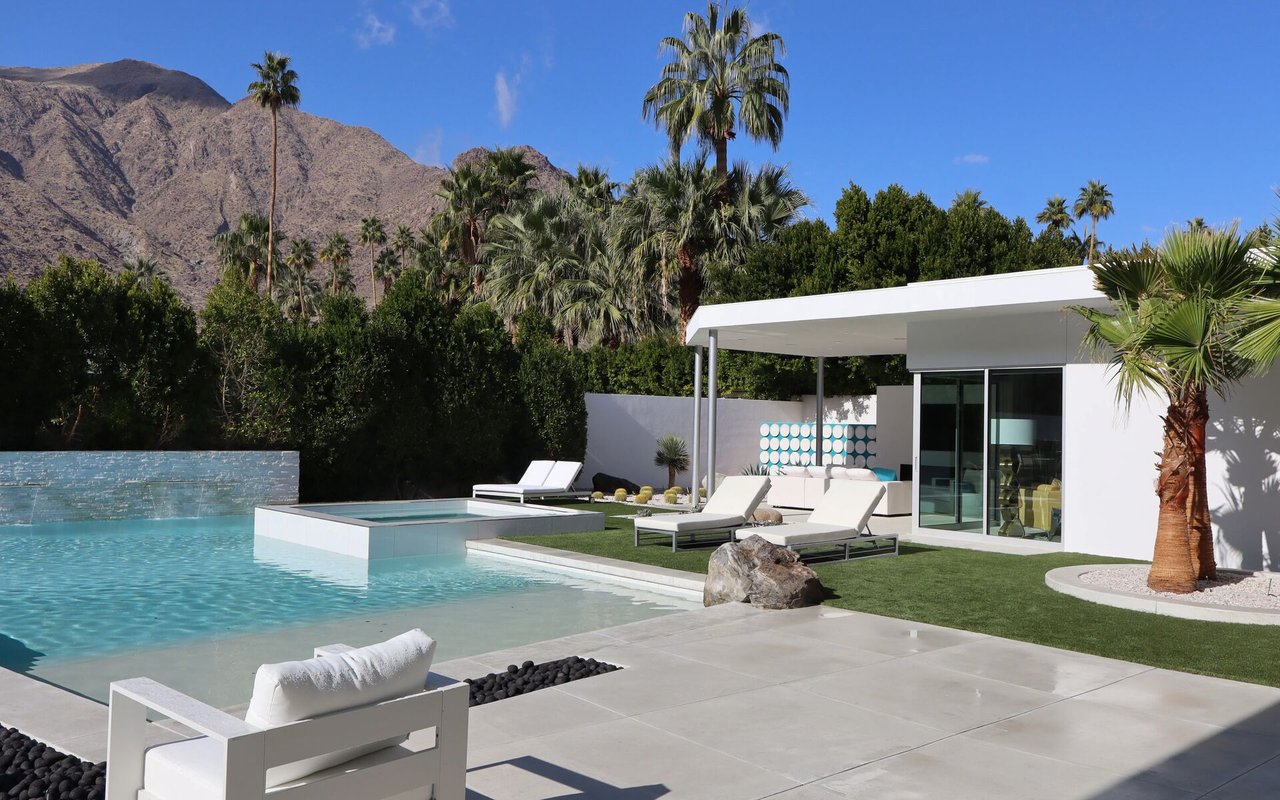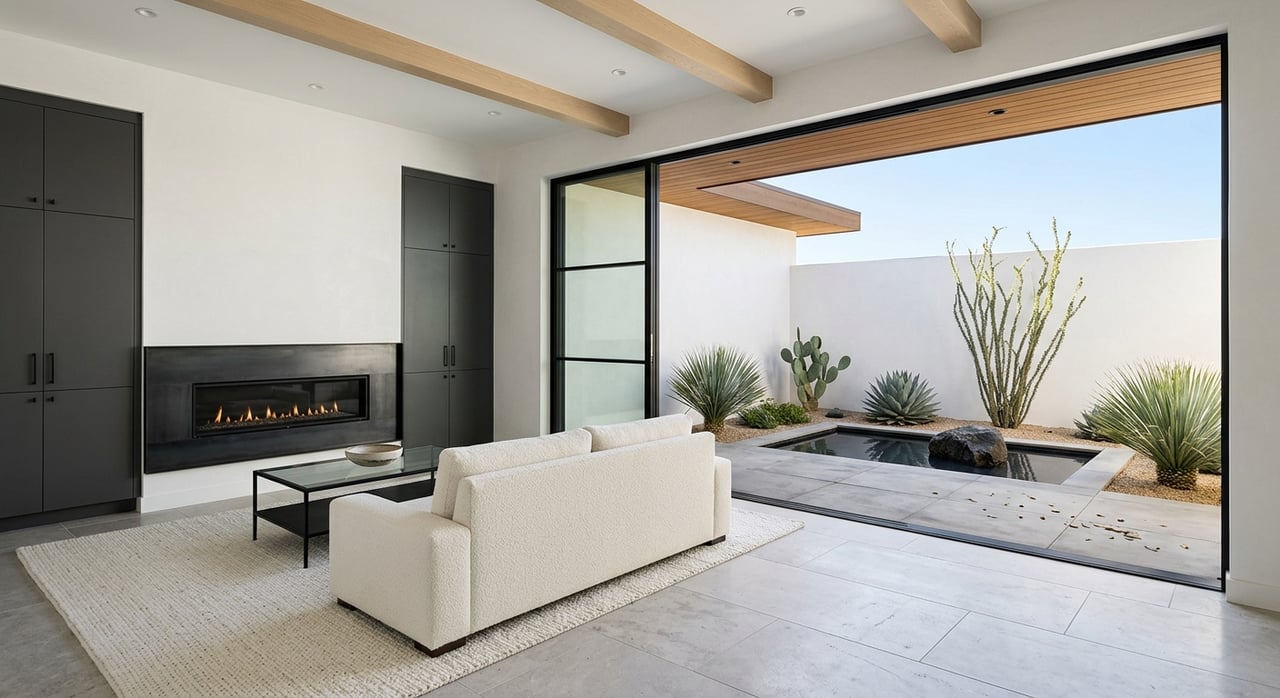
Are you buying Scottsdale as a true second home, or do you want it to live like your primary residence from day one? That distinction matters more here than in many luxury markets, because Scottsdale ownership is shaped by seasonality, heat, community structure, and the level of day-to-day upkeep you want to carry. If you are weighing a travel-friendly lock-and-leave residence against a larger full-time estate, this guide will help you sort through the tradeoffs and identify which fit is more aligned with your lifestyle. Let’s dive in.
Why this choice matters in Scottsdale
Scottsdale’s climate naturally pushes second-home buyers to think carefully about maintenance and usage. According to climate normals for Scottsdale Municipal Airport, average daily highs reach 102.0°F in June, 104.1°F in July, and 102.9°F in August, while January averages 66.5°F, with annual precipitation averaging 8.73 inches. In other words, this is a market where seasonal living patterns and ease of ownership often become central to the purchase decision.
Community design also plays a major role. Much of Scottsdale’s luxury inventory is concentrated in master-planned and gated North Scottsdale communities such as DC Ranch, Desert Mountain, and Troon Village, where access control, privacy, and neighborhood standards are built into the ownership experience. That structure can be a major advantage, but it also means your day-to-day experience may depend less on the community name and more on the exact village, building, or sub-association.
What lock-and-leave means in Scottsdale
In Scottsdale, a lock-and-leave home typically means a condo, villa, or other low-maintenance residence designed around convenience. The appeal is simple: you can arrive, enjoy the property, and leave again without needing to manage a long to-do list before or after each stay. For many second-home buyers, that predictability is the point.
These homes often sit inside communities that emphasize gate access, centralized upkeep, and an easier ownership rhythm. In practical terms, that can include maintained landscaping, building maintenance, and travel-friendly support features that reduce the amount of hands-on oversight required when you are away.
Common lock-and-leave features
- Gated or controlled access
- Lower exterior maintenance responsibility
- Maintained landscaping in shared areas or sub-associations
- Condo, villa, patio home, or similar compact footprint
- Service-oriented living with a more turnkey feel
- Strong fit for seasonal or part-time use
Scottsdale communities that fit the lock-and-leave profile
One of the clearest examples is The Landmark at Kierland. The property describes its lifestyle as turnkey and specifically positions itself as a lock-and-leave home, with a privacy gate, concierge and porter staff, and a location within walking distance of Kierland Commons and Scottsdale Quarter. For a buyer who values convenience and a more urban luxury pattern, that is a strong match.
Gainey Ranch is another important example, though with a little more nuance. Its master association maintains landscape and building maintenance elements across satellite associations, and The Enclave at Gainey Ranch highlights gated access, around-the-clock security patrols, and maintained landscaping. That combination often appeals to seasonal owners who want a consistent, low-friction ownership experience.
Desert Mountain also shows how lock-and-leave can exist inside a very high-end private community. Community materials note that many seasonal buyers choose low-maintenance villas or lock-and-leave properties there, and the HOA confirms that all villages are gated. If you want a refined North Scottsdale setting without taking on the demands of a large custom home, this is an important category to explore.
DC Ranch belongs in this conversation as well. The community provides 24-hour patrol, gate access, and vacation watch while residents are away, which can be especially relevant if you plan to come and go through the year. It is a reminder that even larger master-planned communities may have product types that support absentee ownership quite well.
What full-time estate living usually means
A full-time estate typically offers more scale, more privacy, and more control over how the property lives. In Scottsdale, that often means custom or semi-custom homes on larger lots, with more substantial indoor-outdoor living, stronger separation from neighbors, and room for entertaining in a way that feels more permanent. Even if you use the home seasonally, it is designed to function like a primary residence rather than a convenient outpost.
This option tends to appeal to buyers who want a deeper sense of place. Instead of prioritizing ease above all else, you may be prioritizing architecture, views, outdoor space, and a home that reflects a more personal vision. That can be a compelling choice in Scottsdale, especially in communities known for preserved desert character and custom homesites.
Common estate advantages
- Larger floor plans and larger lots
- Greater privacy and separation
- More outdoor living and entertaining space
- More flexibility in how the home functions
- A stronger primary-residence feel
- More architectural individuality in custom-home settings
Scottsdale communities that fit the estate profile
Silverleaf stands out as one of the clearest estate examples in Scottsdale. DC Ranch community materials describe it as an exclusive enclave with grand estate-character architecture, formal estate gardens, custom lots, and expansive views. If your vision of Scottsdale includes a legacy-scale property with strong architectural presence, this is a classic reference point.
DC Ranch more broadly is also important because it includes multiple housing types within one master-planned framework. Its real estate materials note a mix of custom-designed estates, single-family homes, townhomes, patio homes, and apartments. That matters because a buyer can assume a broad community name signals one lifestyle, when in reality the specific village may offer something very different.
Desert Mountain is another strong estate setting. Its HOA notes that the village concept supports security, architectural integrity, and infrastructure, and that building envelopes preserve at least half of each lot for native desert. That planning structure helps explain why many of its custom-home areas feel spacious, private, and closely tied to the surrounding landscape.
Troon Village also belongs on the estate side of the conversation. It is a 1,400-acre master-planned golf community with roughly 1,300 homesites across gated, guard-gated, and non-gated subdivisions that include townhomes, semi-custom homes, and custom homes. The community also notes that its higher elevation can be cooler than the valley floor, which is one reason some buyers prefer the area for a primary residence or longer stays.
Estancia is another high-end example referenced within this part of the market. Its club is invitation-only and located inside a private gated community, reinforcing the more private, estate-oriented ownership pattern many buyers seek at the top end of Scottsdale.
The tradeoff: freedom versus simplicity
The real decision often comes down to how you want to spend your time. A lock-and-leave residence offers convenience, predictability, and easier travel, which can be especially appealing if Scottsdale is one stop within a broader lifestyle. You are often buying time back, along with a more managed ownership experience.
An estate offers space, privacy, and a more immersive residential feel. You may gain larger entertaining areas, more meaningful outdoor living, and a stronger sense of permanence. In exchange, you will usually take on more landscape service, more exterior upkeep, and more vendor coordination.
Scottsdale communities also tend to pair luxury with standards and oversight. DC Ranch and Gainey Ranch require owners to work within exterior and landscape standards, while Desert Mountain emphasizes architectural review, security, and stewardship. Those guidelines can support a polished environment, but they are still part of the ownership equation whether you buy a villa or an estate.
How to tell which fit is right for you
If you are unsure which direction to take, start with how you plan to use the property, not just how it looks in photos. Your ideal home should match your rhythm of travel, entertaining, maintenance tolerance, and the degree of privacy you want from day to day. In Scottsdale, those choices often shape satisfaction more than square footage alone.
A lock-and-leave may fit you if
- You plan to use Scottsdale part-time or seasonally
- You want to arrive and leave with minimal preparation
- You prefer managed upkeep and more predictable maintenance
- You value concierge-style convenience or walkable amenities
- You do not need large-scale entertaining space
A full-time estate may fit you if
- You want the home to feel like a primary residence
- You prefer larger lots and more privacy
- You want more outdoor living and hosting space
- You value architectural individuality and a stronger sense of place
- You are comfortable with more ongoing property oversight
The key Scottsdale nuance: product type matters
One of the biggest mistakes buyers can make is assuming the neighborhood name tells the whole story. In Scottsdale, many communities are layered. DC Ranch includes everything from custom estates to patio homes and apartments, Desert Mountain includes custom estates as well as villas and lock-and-leave homes, and Gainey Ranch is organized through a master association with satellite associations that can carry different maintenance expectations.
That means your best fit is often found at the village or sub-association level. Two homes with the same broad community address may live very differently once you factor in maintenance responsibilities, gate structure, privacy, and how the property is designed to be used. In a market this nuanced, precise guidance matters.
If you are comparing Scottsdale second-home options and want a more curated read on which communities align with your lifestyle, Luxe Client Group offers discreet, design-minded guidance for buyers seeking everything from turnkey convenience to legacy-scale estate living.
FAQs
What is a lock-and-leave home in Scottsdale?
- A lock-and-leave home in Scottsdale is usually a condo, villa, or similar low-maintenance residence designed for easier travel, centralized upkeep, and a more turnkey ownership experience.
What is a full-time estate in Scottsdale?
- A full-time estate in Scottsdale usually refers to a custom or semi-custom home on a larger lot with more privacy, more entertaining space, and a stronger primary-residence feel.
Which Scottsdale communities offer lock-and-leave options?
- Examples in the research include The Landmark at Kierland, certain maintained neighborhoods within Gainey Ranch, low-maintenance villas in Desert Mountain, and some product types within DC Ranch.
Which Scottsdale communities are known for estate living?
- Examples in the research include Silverleaf, custom-home areas within DC Ranch, Desert Mountain custom-home villages, Troon Village, and Estancia.
Why does Scottsdale climate affect second-home decisions?
- Scottsdale’s hot summer temperatures, mild winter weather, and seasonal ownership patterns often make low-maintenance living a higher priority for buyers deciding how they want to use a second home.
Why is the specific village important in Scottsdale?
- Many Scottsdale communities include multiple housing types and different maintenance structures, so the specific village, tower, or sub-association often matters more than the broad community name alone.