Single-level homes in the Phoenix metro have always carried a preference premium among certain buyer profiles. What has changed in the $2M+ segment over the past several years is that preference has become a measurable price variable, and the gap it produces is wider than most sellers and buyers account for when comparing properties.
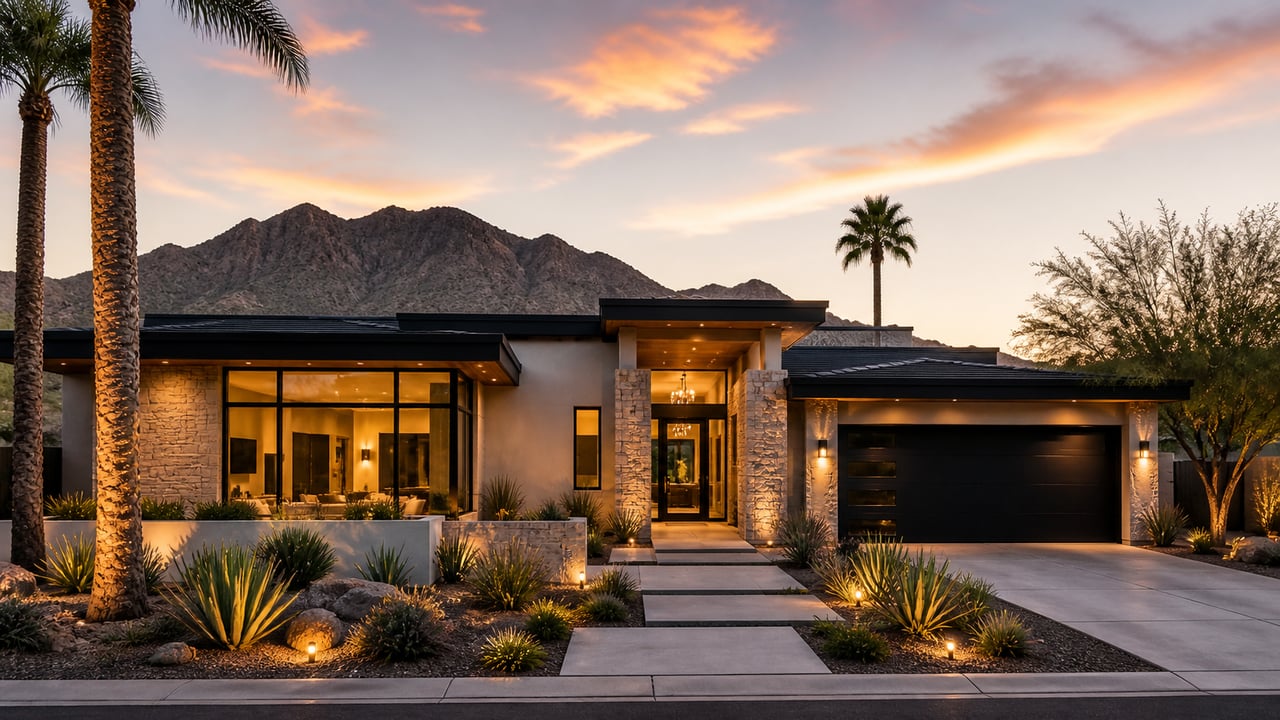
In Scottsdale, Paradise Valley, and Arcadia, single-level properties at comparable square footage and location are consistently closing above their two-story counterparts. The reasons are structural, not stylistic.
Why the Preference Is Structural
The buyers most active in the $2M+ range in the Valley include a significant share who are making long-hold decisions. They are not buying for five years. They are buying for ten to twenty, in many cases with the intention of aging in place or supporting family transitions that make stairs a genuine functional consideration. At this price point, the buyer is often sophisticated enough to think past the current moment and price for the life they intend to have in the property.
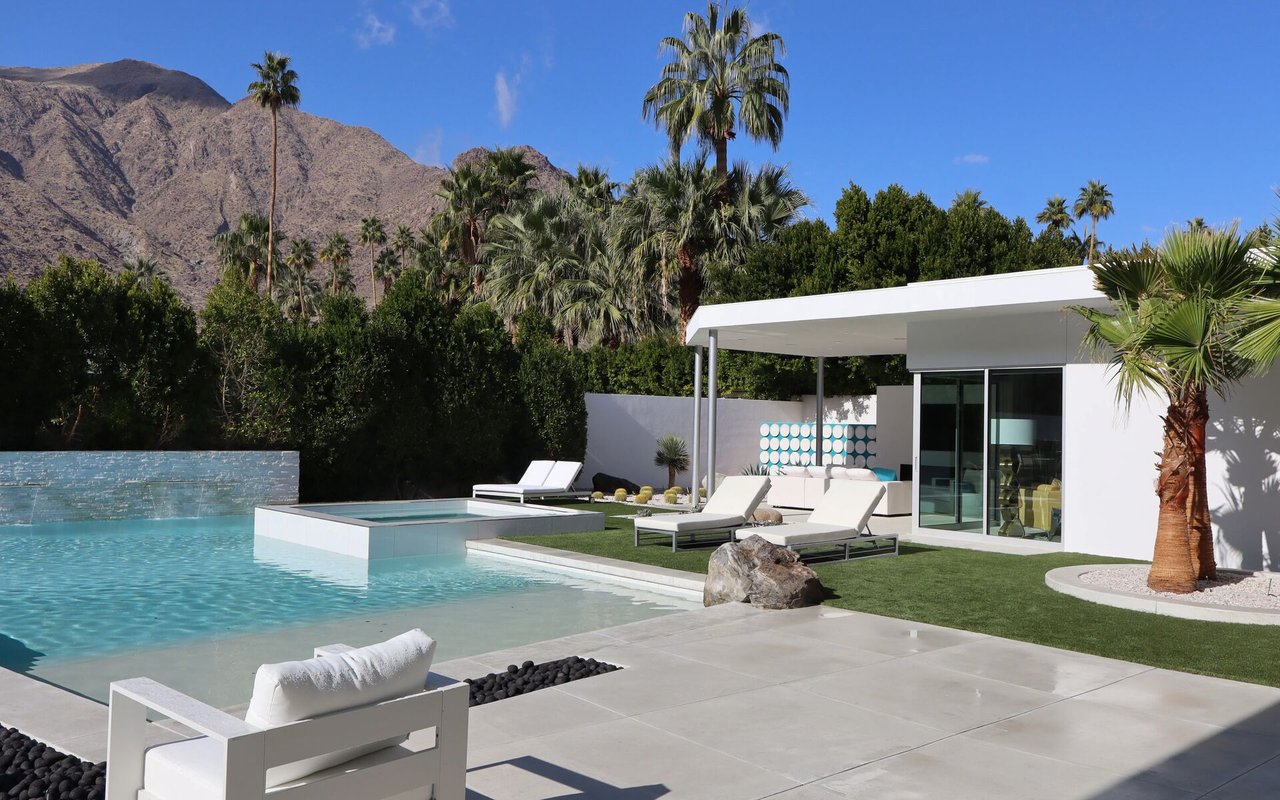
Single-level design also aligns more naturally with the indoor-outdoor integration that defines well-executed Arizona living. A single-level floor plan with a strong relationship to the pool, the covered outdoor space, and the landscape reads as coherent in a way that a two-story with a rear balcony and a downstairs patio does not always achieve. The flow is simpler, the connection is more direct, and the privacy logic of the primary suite is easier to resolve.
What the Price Gap Looks Like in Practice
In Paradise Valley, single-level properties in the $3M-$5M range have consistently commanded higher price-per-square-foot than two-story properties with comparable lot size and finish level. The gap is not uniform, because location, outdoor living quality, and design condition all modulate it, but it is persistent. A two-story property that would otherwise be a reasonable comparables match for a single-level often cannot be used as a direct comp without adjusting down.
In Arcadia, the single-level premium is particularly pronounced in the $2M-$3M range, where the buyer pool includes a high proportion of design-literate purchasers who are weighing the resale trajectory of what they are buying. In a neighborhood where single-level properties on strong lots are genuinely scarce, scarcity reinforces the premium.
Implications for Sellers of Single-Level Properties
A seller with a single-level property in any of these submarkets is holding a structural advantage that is not fully reflected in simple price-per-square-foot comparisons if those comparisons include two-story inventory. The correct frame is to compare against single-level closed sales specifically, and to understand that the buyer pool for a well-presented single-level is both broader and more motivated than the buyer pool for a comparable two-story.
That advantage is most fully realized when the property is prepared to meet the expectations that come with it. Buyers seeking a single-level at this price point are not accepting a design compromise in exchange for the floor plan. They expect the floor plan and the finish level and the outdoor integration. When all three are present, the single-level premium holds. When the floor plan is there but the presentation is not, the advantage narrows.
Floor plan dynamics shift at different price points and in different submarkets, and the data behind them changes with each quarter. We publish ongoing analysis on what the Valley market is actually rewarding. Bookmark the Curated Journal and come back — the next read may be the one that clarifies your decision.