If you are preparing to sell a home in the $3M to $6M range in Scottsdale or Paradise Valley, you are probably thinking about what you can do before listing to protect or improve your price. The honest answer is that most improvements you make in the final three months before listing will not generate a dollar-for-dollar return. Some will. Some will not. And a few commonly assumed value-adds will actively complicate your sale.
What follows is a direct look at which interior design and finish decisions register with buyers in this segment, which ones are essentially invisible to the price, and where sellers tend to misread what the market is actually paying for.
The finishes that consistently support value in the $3M+ Scottsdale and Paradise Valley market
Whole-home visual consistency
The single most common value-suppressing condition we see in luxury homes is inconsistency. A kitchen renovated in 2022 alongside bathrooms that were last updated in 2008 does not read as a partially updated home. It reads as a home that was not thought through, and buyers discount accordingly. A home where the flooring, hardware, lighting, and trim language carry through coherently from the primary spaces into the secondary ones commands a premium over a home where the principal suite was treated as a showcase and the rest was left alone.
Kitchen specification that reflects the current buyer expectation
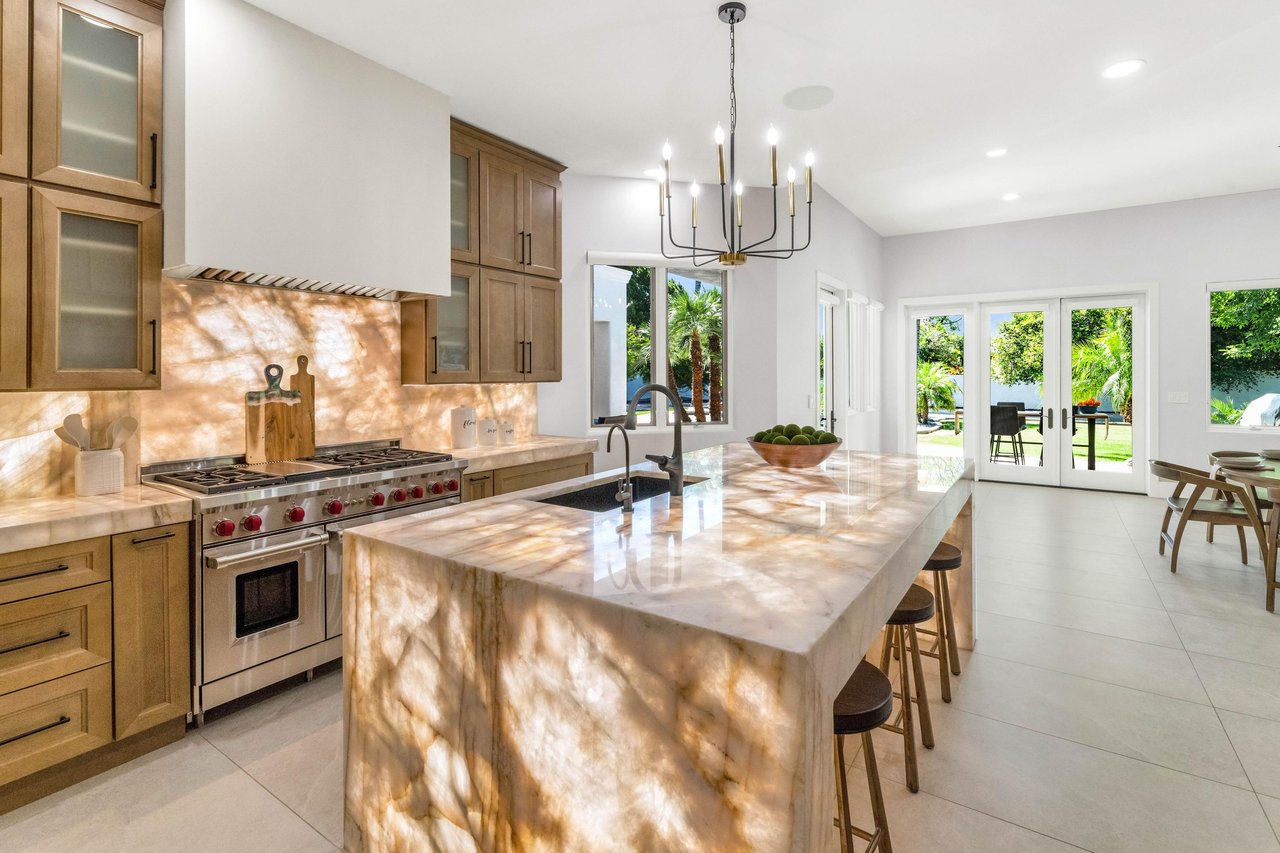
In this segment, buyers have a clear mental model of what a $3M kitchen looks like. Integrated panel-front appliances, waterfall edge stone counters in a material that has not gone generic (think leathered quartzite or European marble rather than standard quartz), custom cabinetry with furniture-quality joinery, and a layout with genuine prep space and a second sink. The buyers in this price range have seen a lot of kitchens. A kitchen that exceeds the mental model supports price. One that falls short becomes a line item in a buyer’s head, and that line item usually lands higher than the actual cost to address it.
Primary bathroom with genuine spa functionality
The primary bathroom in the $3M+ segment is not selling on tile selection alone. Buyers want: a freestanding soaking tub that is positioned correctly for the architecture, a shower large enough to feel like a spa experience (not a tiled closet with a rain head attached), dual vanities with adequate counter space and meaningful storage, and natural stone that carries through to the floor rather than stopping at eye level. Heated floors are now expected rather than notable. What moves buyers in this segment is the sense that the space was designed for how people actually live in it.
Primary closet as a destination space
In the past three years, the primary closet has moved from a storage function to a genuine decision point for buyers in this segment. Island with integrated jewelry storage, task lighting calibrated for clothing selection, custom built-ins with a mix of hanging, shelving, and drawer configurations, and a finish level that reads as a room rather than a closet are all now part of what the $3M buyer expects. Sellers who have the square footage but a builder-grade closet are leaving a visible gap.
Features that are frequently overvalued by sellers
Smart home technology
Technology is frequently cited as a value-add by sellers who invested in it. Buyers at this price point are rarely moved by the presence of a smart home system. They are frequently concerned about it. A system that requires a technician to explain, a controller that is proprietary to a platform the buyer does not use, or an integration that cannot be easily updated creates friction rather than enthusiasm. The exception is straightforward whole-home audio and lighting control that works reliably and can be demonstrated simply. Technology that cannot be demonstrated without explanation is not a selling point.
Wine storage beyond a certain scale
A well-designed wine room with appropriate climate control is a legitimate feature in this market. A 2,000-bottle cellar that occupies what would otherwise be flex space or a secondary bedroom narrows the buyer pool rather than expanding it. Sellers with significant wine infrastructure should understand that the buyers willing to pay for it are a subset of the broader luxury buyer pool, and pricing for that subset at a broader audience is a pricing mistake.
Overly personalized custom work
Custom millwork, built-ins, and architectural details are assets when they read as elevated. They become liabilities when they are so specific to the prior owner’s taste that a buyer immediately begins mentally calculating the cost to remove them. Color choices, tile patterns, and custom fixtures that are directional rather than refined tend to generate discount conversations rather than premium ones. The test is simple: does the detail make a buyer feel like the home was designed for them, or does it remind them that it was designed for someone else?
What to invest in during the final sixty days before listing
Staging that matches the architecture
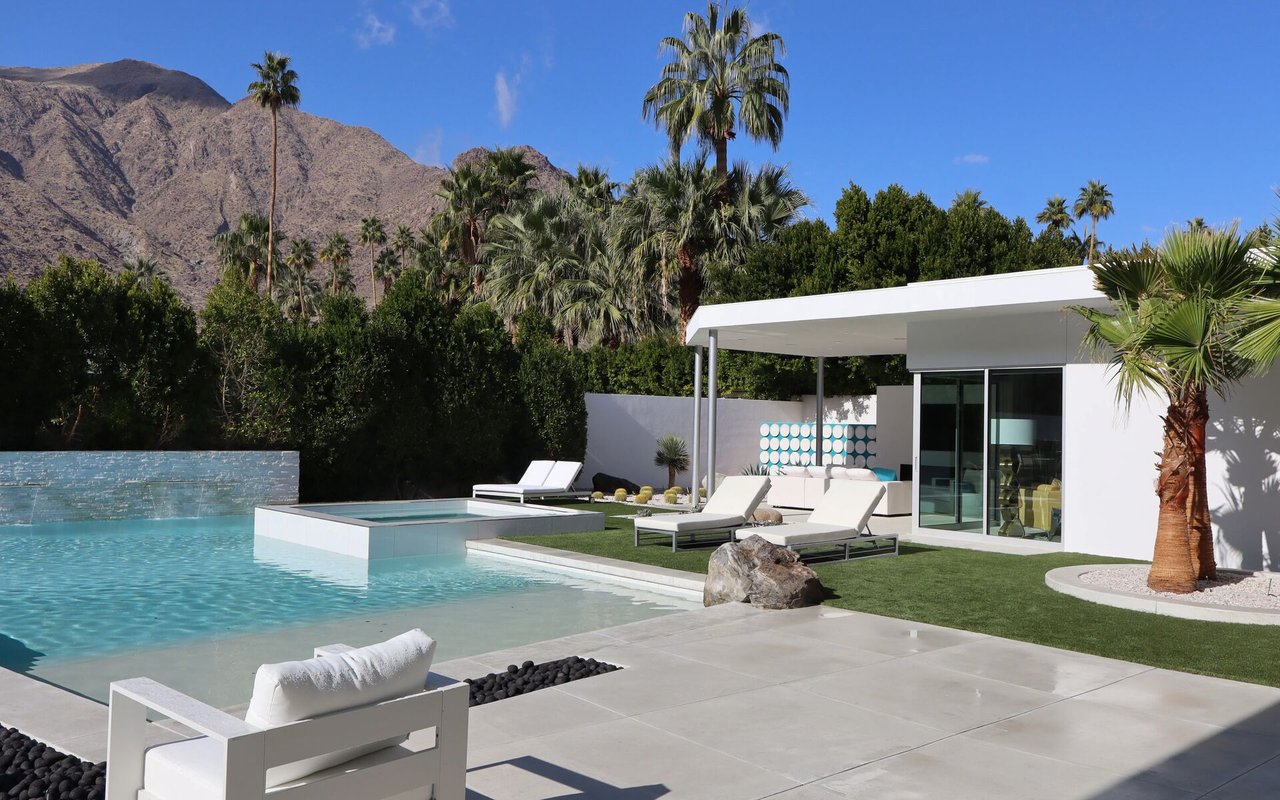
Staging a $4M home with furniture that looks like it belongs in a $1.5M home is one of the most common mistakes in this segment. The scale of furniture, the quality of textiles, and the intentionality of object placement need to match what a buyer at this price point has in their own home or aspires to. Staging is not decoration. It is a frame for the architecture. Mismatched staging makes a beautifully finished home look smaller and less considered than it is.
Exterior paint and hardscape condition
First impressions in the $3M+ segment are evaluated at the curb and at the front door before a buyer steps inside. Exterior paint in a condition that shows its age, cracked or weed-compromised hardscape, and lighting that was installed a decade ago and has not been updated are all visible signals that tell a buyer the home has been lived in more than it has been maintained. These are high-return investments relative to their cost. They do not generate premium on their own, but they protect the premium the interior has already earned.
We walk through every home we represent from the perspective of what the market is paying for and where there is a gap between what the seller has and what the buyer expects. If you are preparing to sell, that conversation is worth having before any money is spent on preparation.
Request a Private Market Briefing →
Frequently Asked Questions
What interior upgrades add the most value before selling a luxury home in Scottsdale?
Whole-home visual consistency, a kitchen that meets the current buyer expectation for the price point, and a primary bathroom with genuine spa functionality are the three areas that have the clearest impact on buyer perception and offer levels. Pre-listing improvements that address visible inconsistencies return more than additions that add a feature the buyer pool was not already expecting.
Does a smart home system increase the sale price of a luxury home?
Rarely at this price point. Buyers in the $3M+ segment are more cautious about complex smart home systems than sellers typically expect. Systems that require explanation, cannot be demonstrated simply, or are locked into a proprietary platform often generate buyer concerns rather than enthusiasm. Simple, reliable lighting and audio control is different from a full integrated system.
What do luxury buyers in Paradise Valley and Scottsdale prioritize in a kitchen?
Panel-front integrated appliances, custom cabinetry with furniture-quality joinery, stone counters in materials that have not gone generic, and a layout with real prep space. The kitchen is a decision point in this segment, not a background feature. Buyers have a mental model of what a $3M kitchen looks like, and a kitchen that falls below that model becomes a negotiating point.
How important is the primary closet when selling a luxury home?
Increasingly important. In the past three years, the primary closet has moved from a secondary consideration to a genuine differentiator in the $3M+ segment. Buyers in this range expect a space that functions as a destination, not a storage room. Builder-grade closets in otherwise high-finish homes are a visible gap.
Does custom millwork or built-in furniture add value when selling?
It depends entirely on how specific it is. Custom work that reads as elevated and neutral is an asset. Custom work that is identifiably tied to the prior owner’s taste, including strong color choices, unusual patterns, or highly personal fixtures, tends to generate discount conversations. The test is whether the detail makes a buyer feel at home or reminds them they are in someone else’s.
What should sellers spend money on in the sixty days before listing a luxury home?
Exterior condition including paint, hardscape, and lighting, staging that matches the architecture and price point, and resolving any visible inconsistencies in finish level across the home. These investments protect the premium the home has already earned. Additions that introduce new features the market was not expecting rarely generate a dollar-for-dollar return.
Susan Solliday and Jennifer Vatistas lead Luxe Client Group at Compass, working with buyers and sellers in the $1M–10M+ market across Paradise Valley, North Scottsdale, Arcadia, and surrounding submarkets.