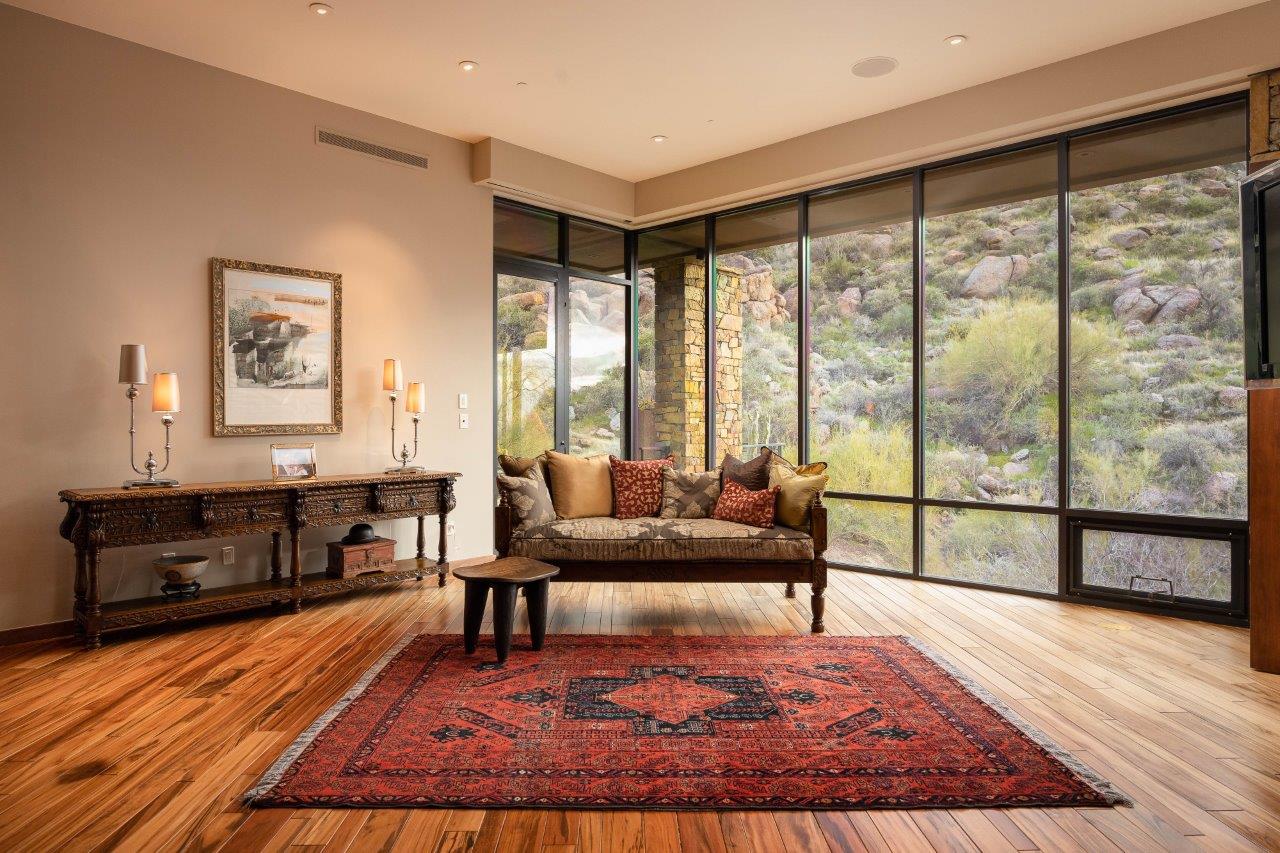
The part of real estate most teams skip, and how it shapes the sale in Scottsdale, Paradise Valley and Central Phoenix.
By Susan Solliday and Jennifer Vatistas, Luxe Client Group | Last updated September 2026
Before selling a luxury home, the most valuable step is deciding what to fix, what to keep and what to leave for the next owner. In Scottsdale, Paradise Valley and Central Phoenix, that answer depends on the competing listings and the likely buyer, and it should be settled together with pricing before any money is spent.
Key Takeaways
A $100,000 improvement rarely adds $100,000 in value. The return often comes from fewer buyer objections and stronger first impressions.
Quality materials and original architecture are often worth keeping, even when they are not current.
Buyers discount unfinished work by more than it costs, so pricing and preparation should be planned together.
Staging works best when it follows a plan for what each room needs to communicate.
The right spend can range from almost nothing to a full floor plan change, depending on the competing listings.
Most homeowners assume the real estate process begins when the photographer arrives.
By then, some of the most important decisions have already been made.
Long before a property appears online, there is a window of time when thoughtful decisions about condition, presentation, pricing and market position can materially affect how buyers perceive the home. This is the preparation phase, and it is one of the most consequential parts of a successful sale.
Yet it is often compressed into a familiar sequence: make a few repairs, bring in a stager, schedule photography and put the property on the market.
For some homes, that may be enough.
For others, particularly distinctive, luxury or design-sensitive properties, it can leave considerable value on the table.
At Luxe Client Group, we approach preparation differently. Before recommending what should be changed, we first determine what the property already has working in its favor, what may interfere with buyer perception and which improvements are actually likely to matter in the current market.
The objective is not to make a home as new as possible. It is to make the property as compelling as possible to the right buyer.
Preparation Begins With Understanding the Property
Every house tells us something before we make a single recommendation.
We look at architecture, proportion, natural light, circulation, materials, condition and the relationship between interior and exterior spaces. We consider what feels intentional, what feels dated, what has lasting value and what a buyer may immediately perceive as a project.
Then we place those observations in a real estate context. How does the home compare with the other properties a likely buyer will see? What expectations come with this price point? Which features distinguish the property? Where could current condition create resistance? And, perhaps most importantly, what should be left alone?
The question of what to leave alone is frequently overlooked. Preparing a home for sale is not synonymous with renovating it.
Which Improvements Are Worth Making Before You Sell?
The improvements worth making before a sale are the ones that change how buyers judge the home’s condition and value. Many larger projects do not return their cost, and some are better left to the next owner.
Once a homeowner decides to sell, deferred projects have a way of suddenly becoming urgent.
The kitchen could be updated. The flooring could be replaced. The primary bath could be remodeled. The landscaping could be redesigned.
Most homeowners have a running list of improvements they once intended to make. But preparing to sell is not the time to complete every unfinished project. The better question is which changes will strengthen the home’s market position, and which are best left to the next owner.
Sometimes the right recommendation is renovation. Sometimes it is painting, lighting, flooring and landscape refinement. Sometimes it is simply thoughtful editing. Sometimes it is correcting deferred maintenance that could make buyers question how well the property has been cared for. And sometimes the best recommendation is to leave an expensive adjustment alone and allow the next owner to make the decision.
That is why preparation decisions should be made as real estate decisions.
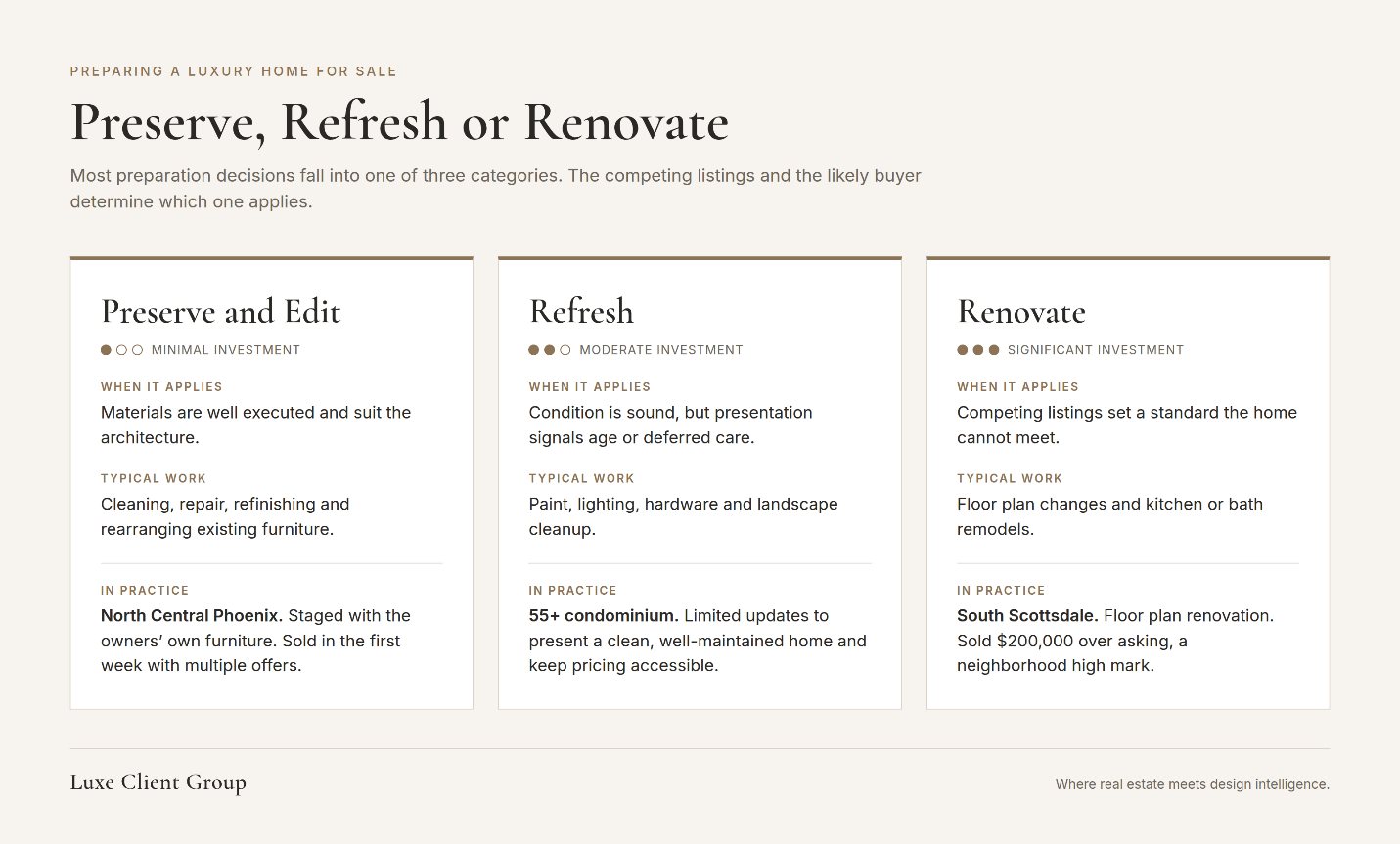
A Simple Framework: Preserve, Refresh or Renovate
Most preparation decisions fall into one of three categories. The competing listings and the likely buyer determine which one applies.
Three Examples: Staging, Refresh and Renovation
The right level of preparation depends on the property, the listings it will compete against and what buyers at that price point expect. Three recent properties show how different those answers can be.
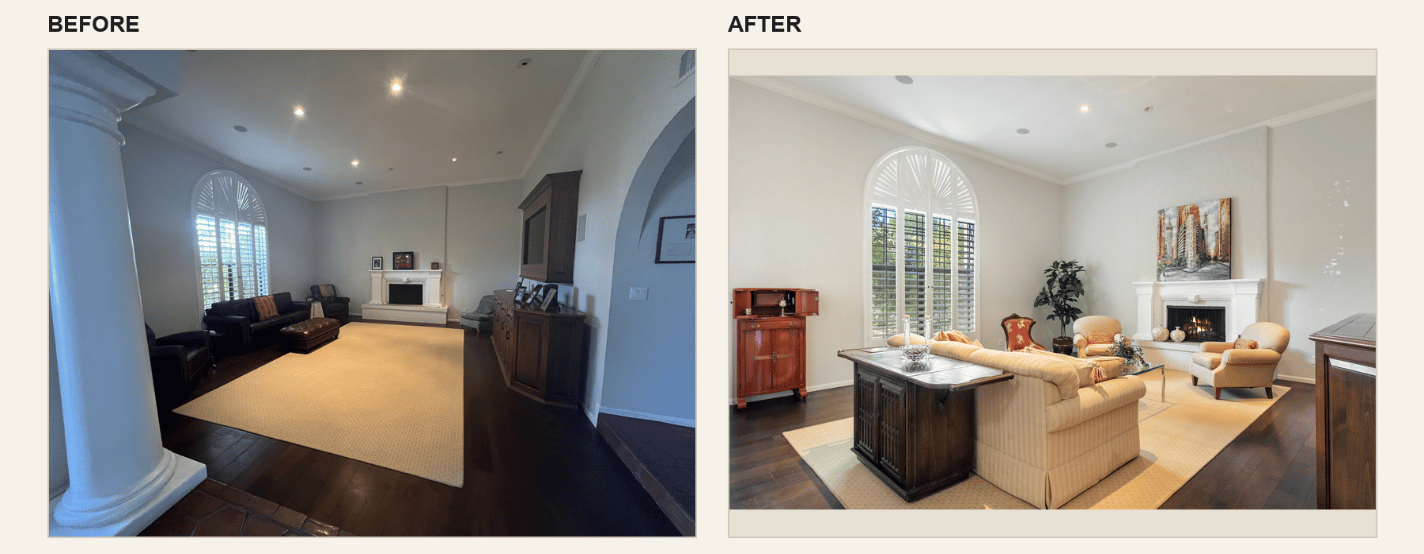
In North Central Phoenix, the home’s architecture was its strongest asset. Instead of bringing in rented furniture, we staged with the homeowners’ own pieces, editing and rearranging them to reveal architectural details and simplify the flow from room to room. The investment was primarily time and judgment. The home sold within its first week with multiple offers.
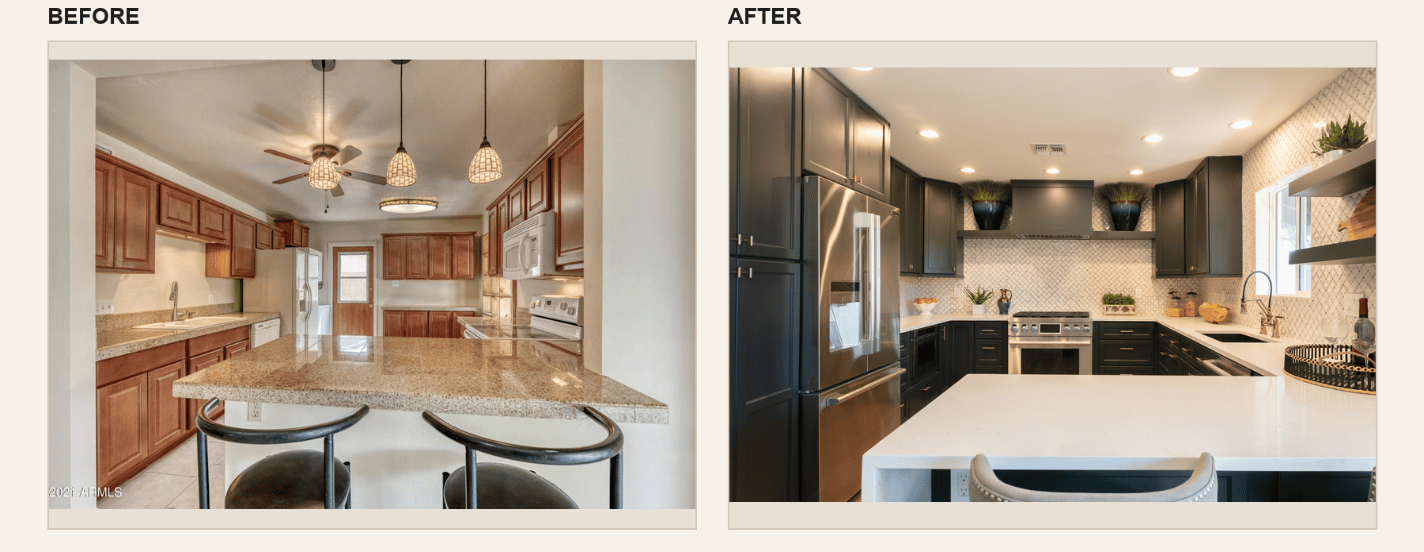
In South Scottsdale, the answer was the opposite. Competing listings offered more marketable floor plans, and that justified a larger renovation to bring the home’s layout in line with what buyers in that range expected. The home sold for $200,000 over the asking price, setting a high mark for the neighborhood.
In a 55+ condominium community, the priority is restraint. Updates are limited to what shows a clean, neat and well-maintained home, because every dollar spent has to be recovered in the price. Before reaching the market, the refresh has already drawn interest from owners in the building and their circle of friends. In a close-knit community, the most likely buyer is often already connected to it.
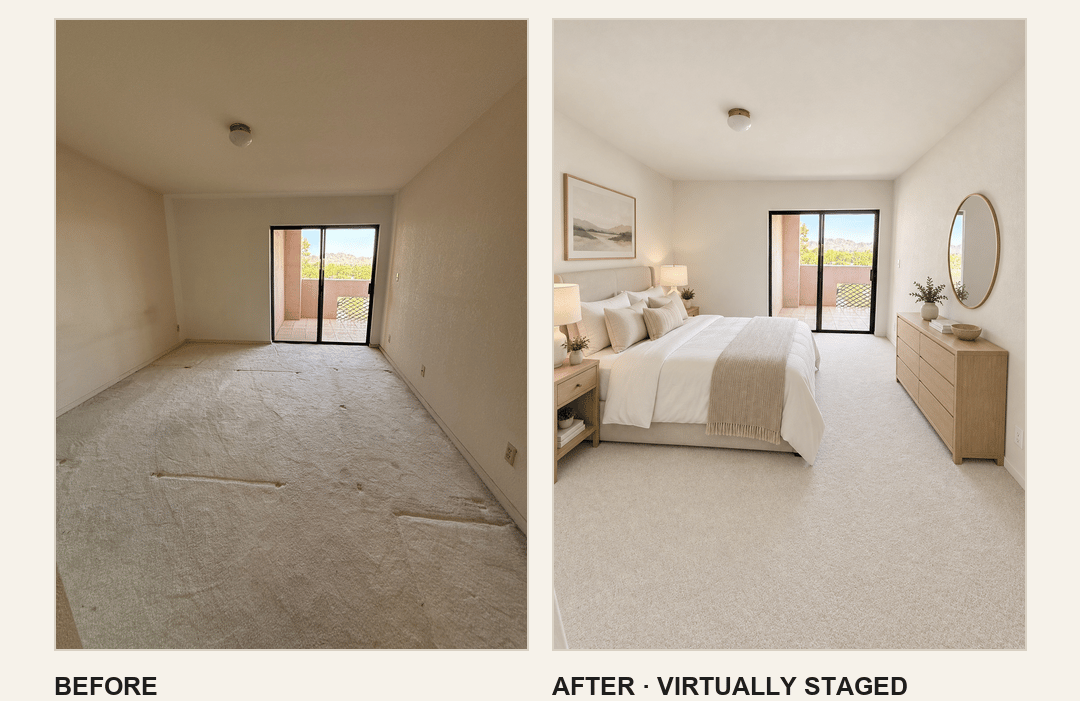
The spending ranged from almost nothing to a significant renovation. The reasoning was the same each time: understand the market first, then decide what the property needs.
What Should You Keep When Selling a Luxury Home?
Materials and details that are well executed and suited to the architecture are often worth keeping, even when they are not in fashion.
Luxury homes often contain elements that are expensive to replace but easy to underestimate.
Natural stone.
Custom millwork.
Hand-finished plaster.
Quality cabinetry.
Architectural ironwork.
Mature landscaping.
Well-proportioned rooms.
Original architectural details.
A finish may not reflect today’s dominant aesthetic and still have considerable quality or architectural integrity. Removing it simply because it is not currently fashionable can be a mistake.
This is particularly important as design cycles accelerate. Buyers have become increasingly accustomed to seeing similar renovations repeated from property to property. A house with genuine material quality, architectural character or a strong sense of place can stand apart precisely because it has not been stripped of everything distinctive. In Paradise Valley and Central Phoenix, that often includes mid-century detailing, original brick, beamed ceilings or mature desert landscaping that cannot easily be recreated.
The question is not simply whether something is “dated.”
The better questions are:
Is it well executed?
Is it appropriate to the architecture?
Does it contribute to the property’s identity?
Would replacing it materially change buyer perception?
Is the replacement likely to be better than what is already there?
Preservation can be as strategic as improvement.
Where Will Buyers See Work?
Sellers naturally experience their homes differently from buyers.
An owner may barely notice a worn threshold, aging fixture or dark room after living with it for years. A buyer encountering the property for the first time has a more immediate experience. They are absorbing hundreds of visual and practical signals at once. Some are minor. Others become shorthand for the condition of the entire property.
A visibly neglected repair can cause a buyer to wonder what else has been deferred. A dark or cluttered room may feel smaller than its dimensions suggest. An awkward furniture arrangement can obscure circulation. Too many competing finishes can make an otherwise well-designed house feel disjointed.
This does not mean everything needs to be corrected. It means we need to understand which issues are likely to influence the buyer’s larger perception of the home. That distinction helps determine where preparation dollars should go.
Which Low-Cost Updates Make the Biggest Difference?
The updates that make the biggest difference before a sale are often modest: paint, lighting, cleaning, landscape cleanup and careful furniture editing.
A carefully selected paint adjustment can improve continuity between rooms. Changing dated light fixtures can alter the perceived age of a space. Refinishing rather than replacing a quality material may preserve character while improving presentation. Furniture editing can reveal architecture that was previously hidden. Landscape cleanup can restore a view or strengthen the arrival experience. Professional cleaning, window washing and properly functioning doors, hardware and lighting can communicate a level of care that buyers may not consciously identify but often perceive.
The goal is prioritization.
Where will the next dollar have the greatest effect? That question becomes particularly important when a seller has a limited preparation budget or when the likely buyer may substantially renovate the property after closing.
Staging Comes After Strategy
Staging can be highly effective, but staging is not the same thing as property preparation. Furniture cannot solve every real estate problem.
Before determining what should be staged, we first consider what the rooms need to communicate. Is the scale of the room difficult to understand? Does an unusual space need a clear purpose? Is the architecture strong enough that minimal furnishings are preferable? Would existing furniture photograph well with editing and rearrangement? Does the likely buyer need to see a more contemporary lifestyle within a traditional architectural envelope?
Staging works best when it supports the property’s larger market position. Otherwise, it can become decoration without strategy.
The Buyer Begins Forming an Opinion Before the Showing
The first showing usually happens on a screen.
Buyers evaluate properties through photographs, video, floor plans, listing copy and digital marketing before deciding whether a home deserves their time. That makes preparation inseparable from marketing.
Photography cannot manufacture good proportion. Copy cannot compensate for a room that has no clear purpose. A beautifully produced video cannot completely overcome distracting maintenance issues. Marketing works best when the underlying property has first been thoughtfully prepared.
Once that work is complete, photography and storytelling can translate what is distinctive about the home into something a buyer can understand before ever walking through the door. For luxury properties, that distinction matters.
Good marketing does more than document rooms. It communicates why the property deserves consideration among all the other ways a buyer could deploy the same capital.
How Should Preparation Affect Your List Price?
Preparation and pricing should be decided together, because buyers discount unfinished work by more than it would cost to complete.
Preparation decisions also need to reflect pricing strategy. A property positioned as one of the strongest offerings in its competitive set carries different expectations than one priced to acknowledge condition or renovation needs.
Sellers sometimes try to occupy both positions at once: pricing as though the property were fully competitive while assuming buyers will overlook the work that remains. Buyers are rarely that generous. They compare. They evaluate what else their money buys. They estimate the cost, inconvenience and uncertainty of improvements. They make allowances for work they believe they will need to undertake, and those allowances are not always proportional to the actual cost.
A $30,000 project may create considerably more than $30,000 of psychological resistance. Conversely, spending $30,000 does not guarantee a better result. This is why pricing and preparation should be developed together.
Design Knowledge Changes the Conversation
Both co-founders of Luxe Client Group, Susan Solliday and Jennifer Vatistas, came to real estate with extensive professional backgrounds in interior design, construction and the built environment. That experience changes the way we walk through a property.
We are not looking only for attractive finishes. We are considering proportion, circulation, material quality, renovation implications, construction complexity and the relationship between what exists today and what a property could reasonably become.
But design expertise is only useful in a sale when it is applied through a real estate lens. Our role is to understand what the property needs, what the market expects and where intervention is likely to improve the outcome, rather than to impose a personal aesthetic on someone else’s home.
Sometimes that means changing more. Frequently, it means changing less. Knowing the difference is where experience matters.
How Buyers Can Judge a Home’s Real Potential
The same analysis helps buyers separate what is cosmetic from what is fundamental, which is often the difference between a sound purchase and an expensive one.
Buyers routinely encounter homes that are beautifully presented but fundamentally wrong for their needs, along with properties that are poorly presented but have exceptional underlying potential.
Being able to distinguish between the two can materially affect a purchase decision. Cosmetic work is usually solvable. Poor proportion may not be. Finishes can be changed. Natural light is harder to create. A kitchen can often be remodeled. A difficult site condition or compromised floor plan may require a very different level of investment.
Understanding those distinctions helps buyers evaluate not simply what a property looks like today, but what it would take to make it work for their ideal home and lifestyle.
The Best Preparation Often Happens Quietly
When a property is exceptionally well prepared, buyers may never know how much thought preceded their visit. They simply experience a home that feels coherent. The rooms make sense. The architecture is visible. Maintenance concerns do not dominate the conversation. The photography feels accurate. The price feels connected to the condition and quality of the offering. Nothing appears overworked.
That quiet coherence is the goal. Good preparation should not call attention to itself. It should allow buyers to concentrate on the property. And that work begins well before the listing goes live.
Frequently Asked Questions
Should I renovate my kitchen before selling?
Only if the competing listings at your price point have updated kitchens and yours would stand out as the exception. A kitchen with quality cabinetry and stone often needs refinishing and new lighting, not replacement.
How much should I spend preparing my home for sale?
No fixed percentage applies. The budget should be set by the competing listings and the likely buyer. Our recent examples ranged from staging with the owners’ own furniture to a floor plan renovation that sold $200,000 over asking.
Can I stage my home with my own furniture?
Often, yes. Editing and rearranging existing pieces can reveal architecture and improve flow. A North Central Phoenix listing staged this way sold in its first week with multiple offers.
When should I start preparing to sell?
Before you spend money on any project, so that decisions about repairs, preservation and pricing can be made together. If you are considering a sale within the next year, now is the right time to start.
Before You Renovate for Resale, Understand What Is Actually Worth Changing
If you are considering selling within the next year, the best time to evaluate preparation is often before you begin spending money.
A pre-market consultation can identify what should be preserved, what needs repair, what may benefit from refinement, what materially affects marketability and what is better left for the next owner.
That creates a more disciplined path to market and helps ensure that preparation decisions support the larger real estate strategy rather than simply adding another round of projects before a move.
Evaluate Your Property’s Market Position
About the Authors
Susan Solliday is a licensed Arizona real estate agent, NCIDQ-certified interior designer and co-founder of Luxe Client Group at Compass. Her more than 30 years in the Valley span escrow, land assemblage, new construction and interior design, and she is a Past President of the ASID Arizona North Chapter.
Jennifer Vatistas is a licensed Arizona real estate agent, NCIDQ-certified interior designer and co-founder of Luxe Client Group at Compass. She brings more than 20 years of design-build project experience across multiple markets, and she is a Past President of the ASID Arizona North Chapter.
Luxe Client Group serves Scottsdale, Paradise Valley, Central Phoenix and the East Valley, with $128 million in combined sales.
Luxe Client Group
Real Estate Advisory · Design Intelligence