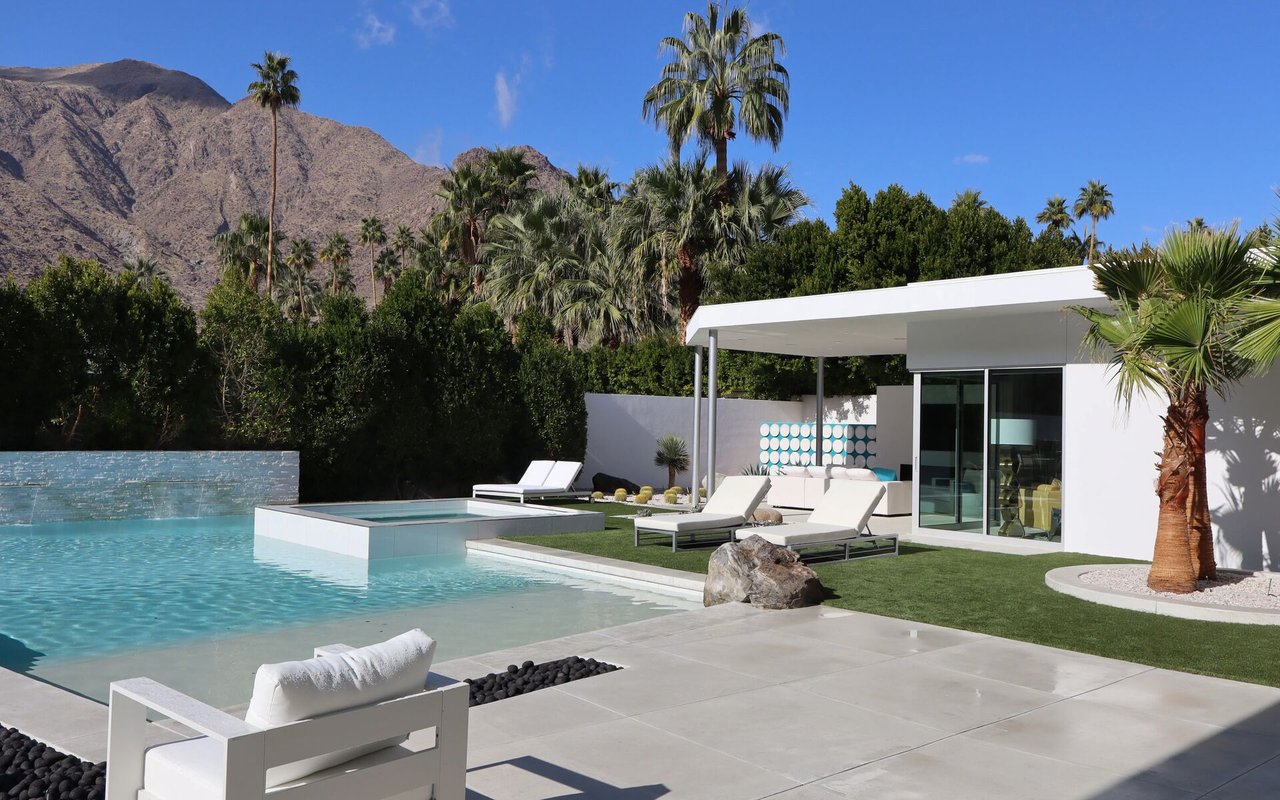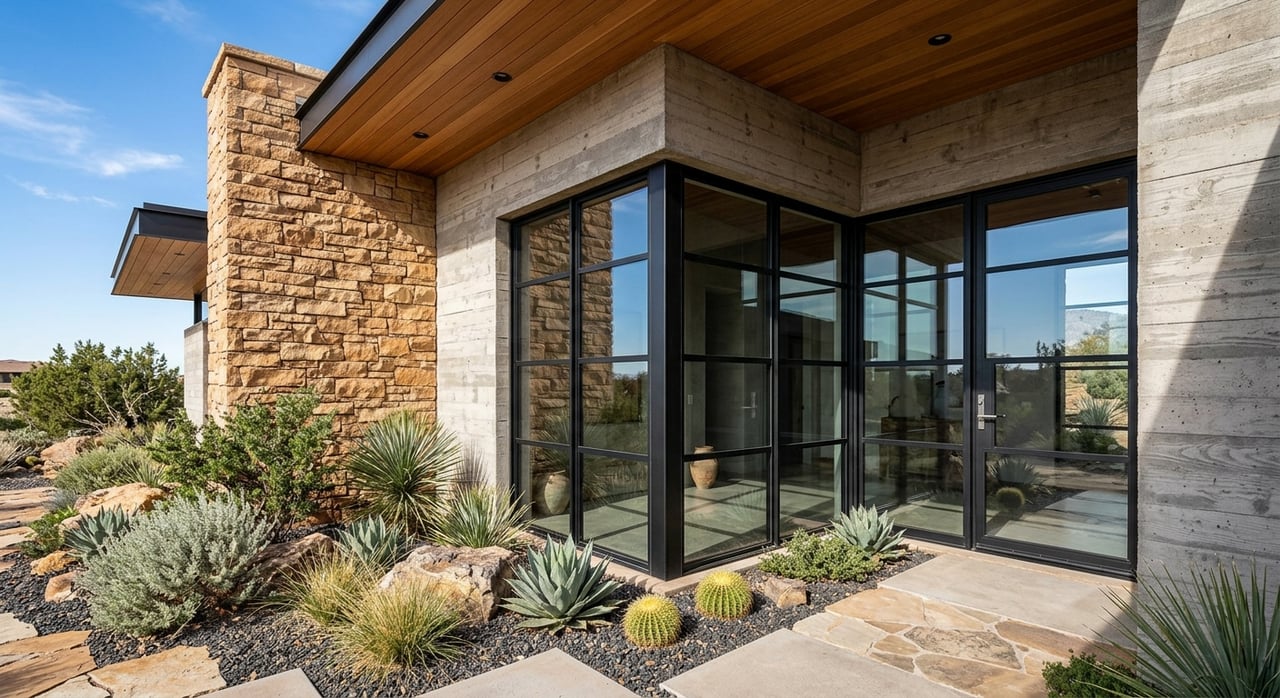
If you want desert views, gated streets, golf access, and newer homes without stepping into Scottsdale’s price tier, East Mesa deserves a closer look. For many buyers, the real appeal is not hype. It is the numbers, the community mix, and the lifestyle trade-offs that come with them. In this guide, you’ll see why Southeast Mesa is gaining attention as a luxury value play, where that value shows up, and what to weigh before you make a move. Let’s dive in.
East Mesa’s value story starts with pricing
The clearest reason East Mesa is getting a second look is the gap between what you pay and what you get. Realtor.com’s April 2026 data shows East Mesa at a median listing price of $465,000 and $268 per square foot. That is close to Mesa overall at $452,000 and $268 per square foot, but well below Phoenix at $485,000 and $294 per square foot and far below Scottsdale at $1.0595 million and $460 per square foot.
That price-per-square-foot spread matters because it points to a different kind of luxury equation. In East Mesa, buyers are often pursuing mountain views, gated sections, golf-oriented communities, trail access, and newer master-planned homes at a lower cost basis than they would find in Scottsdale. The market is not trying to mimic Scottsdale’s brand identity. It is offering a different path to space, amenities, and design value.
Why price per square foot matters
When buyers compare luxury areas, headline price alone can be misleading. A home’s cost per square foot helps you understand how efficiently your budget is working across different submarkets. In East Mesa, that figure stays materially below Scottsdale and below Phoenix citywide, which supports the idea that your dollar may stretch further here.
In practical terms, that can mean more house, more lot, and more amenity access for the same spend. That conclusion is supported by the current pricing spread and the type of communities found in East Mesa. For buyers who care about lifestyle features and not just a zip code label, that is the heart of the value thesis.
Market pace feels measured, not frantic
East Mesa’s pace also adds to its appeal. Realtor.com reports a median 48 days on market in April 2026, compared with 49 days for Mesa overall and 65 days for Scottsdale. That suggests a market that is active, but not as stretched as some luxury corridors can feel.
For you as a buyer, a measured pace can create a more thoughtful search experience. It does not guarantee leverage, but it may allow for more careful comparison across communities and home types. In a market segment where design quality and setting matter, that breathing room can be valuable.
Luxury in East Mesa is community-driven
One reason East Mesa stands out is that its higher-end housing stock is not limited to isolated custom homes. Much of the area’s appeal comes from established master-planned communities with a strong amenity base. That gives buyers a more curated lifestyle package, especially if you value open space, recreation, and neighborhood cohesion.
Several communities help illustrate that point. Each offers a slightly different version of East Mesa luxury, from view-oriented foothill living to golf-centered neighborhoods and more upper-tier resort-style settings.
Las Sendas offers views and open space
Las Sendas is one of East Mesa’s best-known established communities. According to the community’s official site, the master plan includes about 3,500 homes across 2,500 acres, with roughly 36% dedicated to open space, hiking and biking trails, and related natural areas. That open-space ratio helps explain why the area has long appealed to buyers seeking a stronger connection to the desert landscape.
The pricing also supports its place in the conversation. Realtor.com’s April 2026 snapshot shows a median listing price of $730,000, $308 per square foot, and 48 median days on market. For buyers seeking mountain and city-lights views, golf access, and trail-oriented living, Las Sendas shows how East Mesa can feel distinctly elevated without reaching Scottsdale pricing.
Red Mountain Ranch blends golf and gated sections
Red Mountain Ranch offers a different version of the East Mesa lifestyle. The HOA describes the community as having about 1,680 homes, five gated neighborhoods, and a separate country club with an 18-hole Pete Dye golf course, tennis, swimming, and fitness. There is also a lake and neighborhood park network that broadens the day-to-day amenity base.
Realtor.com’s April 2026 data places Red Mountain Ranch at a median listing price of $630,000 and $277 per square foot. That is notable for buyers who want golf-oriented living and gated options while still staying in a pricing band that often looks restrained compared with higher-cost luxury markets elsewhere in the Valley.
Mountain Bridge reaches a higher tier
Mountain Bridge sits in the foothills of northeast Mesa and presents a more upper-tier profile. Its association describes a resort-style master-planned neighborhood with gated sections, open space, trails, and an Owners’ Club with a pool, spa, fitness center, and sports courts near Usery Mountain Regional Park. The setting and amenity mix push it into a more exclusive category within East Mesa.
Redfin’s current market snapshot shows a median sale price of $1.25 million and $345 per square foot. That is meaningfully above broader East Mesa pricing, yet still below Scottsdale’s median listing price per square foot based on the research provided. For buyers who want a more polished, amenity-rich foothill experience, Mountain Bridge shows that East Mesa is not just about affordability. It also contains true upper-tier options.
Newer growth strengthens the value case
East Mesa’s appeal is not limited to established communities. Newer growth in the southeast Mesa and Gateway area is also shaping buyer interest, especially for those who want modern layouts, current finishes, and community amenities built into the plan.
Eastmark’s official site says the community is sold out, but points buyers to Blossom Rock, about four miles away, as the next chapter. Eastmark also notes convenient access to the 101, 202, and 60, along with proximity to Phoenix-Mesa Gateway Airport. Blossom Rock’s current offerings include homes starting in the low $400,000s, with a master plan centered on parks, trails, lakes, and larger community amenities.
Mesa’s Gateway Strategic Plan describes the southeast Mesa and Gateway area around Phoenix-Mesa Gateway Airport as a rapidly developing district expected to serve as an economic engine for the region. For buyers, that supports a practical takeaway: much of East Mesa’s newer housing is arriving through larger master-planned edge growth. Instead of scattered infill, you are more likely to find modern homes in communities designed around shared amenities and lower-maintenance ownership.
Lifestyle is a major part of the draw
East Mesa’s value story is not just financial. It is also about lifestyle access. If your priorities include outdoor time, mountain backdrops, and neighborhood amenities that support a more active routine, this part of Mesa has real depth.
Usery Mountain Regional Park is a major example. Maricopa County reports more than 34 miles of hiking, biking, and horseback trails, including routes with broad desert views. That kind of access gives East Mesa a strong outdoor identity, especially in foothill communities that connect naturally to trail systems and open space.
Day-to-day convenience also matters. The City of Mesa’s amenity base includes shopping nodes such as Superstition Springs Center and Dana Park, which add practical retail and service access to the lifestyle equation. When you combine those everyday conveniences with golf, trails, and view corridors, East Mesa becomes more compelling for buyers who want a balanced living experience.
The trade-off is car dependence
No market offers value without trade-offs, and East Mesa is no exception. The main compromise is transportation pattern and freeway exposure. Access to major routes is part of the appeal, but it also means your daily experience may involve more driving and more sensitivity to traffic than in closer-in neighborhoods.
The Maricopa Association of Governments says the Loop 101 and Loop 202 bottleneck corridor is one of the Valley’s busiest, with one segment carrying more than 307,000 vehicles per day and average speeds dropping to 27 mph in bottlenecks. Eastmark’s emphasis on convenient access to the 101, 202, and 60 reinforces the point. Those roadways support regional mobility, but they also define the area’s car-dependent nature.
For many buyers, that trade still works. If you value more house, more views, and more amenity per dollar, East Mesa may feel like a smart compromise. If you want a more central, less freeway-dependent lifestyle, the equation may look different.
Who East Mesa fits best
East Mesa tends to resonate with buyers who think carefully about relative value. That includes relocation buyers who want modern homes and outdoor access, second-home buyers who care about low-maintenance community infrastructure, and purchasers who are willing to look beyond prestige branding in exchange for a stronger feature set per dollar.
It can also appeal to buyers who want a design-forward home base without paying Scottsdale’s pricing premium. While East Mesa is not defined by the same brand perception, parts of the market offer a compelling mix of newer construction, gated sections, golf, trails, and desert views. For the right buyer, that combination is exactly the point.
Why East Mesa is rising now
East Mesa is rising because it speaks to how many buyers are shopping today. Instead of chasing a label alone, they are comparing square-foot value, amenity access, neighborhood design, and lifestyle fit. On those terms, East Mesa has become harder to ignore.
The data supports that shift. With April 2026 pricing that sits far below Scottsdale on both median listing price and price per square foot, plus a community base that includes established enclaves and newer planned growth, the area occupies a useful middle ground. It offers a more curated and often more spacious experience than many buyers expect at its price point.
If you are weighing where to find luxury features with a more disciplined cost basis in the Phoenix metro, East Mesa deserves a place on your shortlist. And if you want a discreet, design-minded perspective on how it compares with Scottsdale, Paradise Valley, or Central Phoenix, Luxe Client Group can help you evaluate the trade-offs with clarity.
FAQs
What makes East Mesa a luxury value play?
- East Mesa offers access to gated communities, golf, trails, views, and newer homes at pricing that remains well below Scottsdale, especially on a price-per-square-foot basis.
How does East Mesa compare with Scottsdale pricing?
- Realtor.com’s April 2026 data shows East Mesa at $465,000 median listing price and $268 per square foot, compared with Scottsdale at $1.0595 million and $460 per square foot.
Which East Mesa communities feel the most upscale?
- Las Sendas, Red Mountain Ranch, and Mountain Bridge are key examples, with features such as golf, gated sections, open space, trails, and resort-style amenities.
Is East Mesa mostly older housing or new construction?
- It includes both established master-planned communities and newer edge-growth communities in southeast Mesa, where modern homes and shared amenities remain a major part of the story.
What is the biggest trade-off of living in East Mesa?
- The main trade-off is greater car dependence and freeway exposure, especially around busy corridors tied to the Loop 101 and Loop 202.
Who should consider buying in East Mesa?
- East Mesa may be a strong fit for relocation buyers, second-home buyers, and value-focused purchasers who want more house and amenities per dollar and are comfortable with a more suburban, car-oriented lifestyle.