Neighborhood Character & Architectural DNA
Carefree is shaped by topography, preservation mandates, and intentional planning limits. Development density is low by design, with homes positioned to respect elevation, view corridors, and the surrounding desert environment. The community’s planning philosophy prioritizes land stewardship and visual continuity over volume or uniformity.
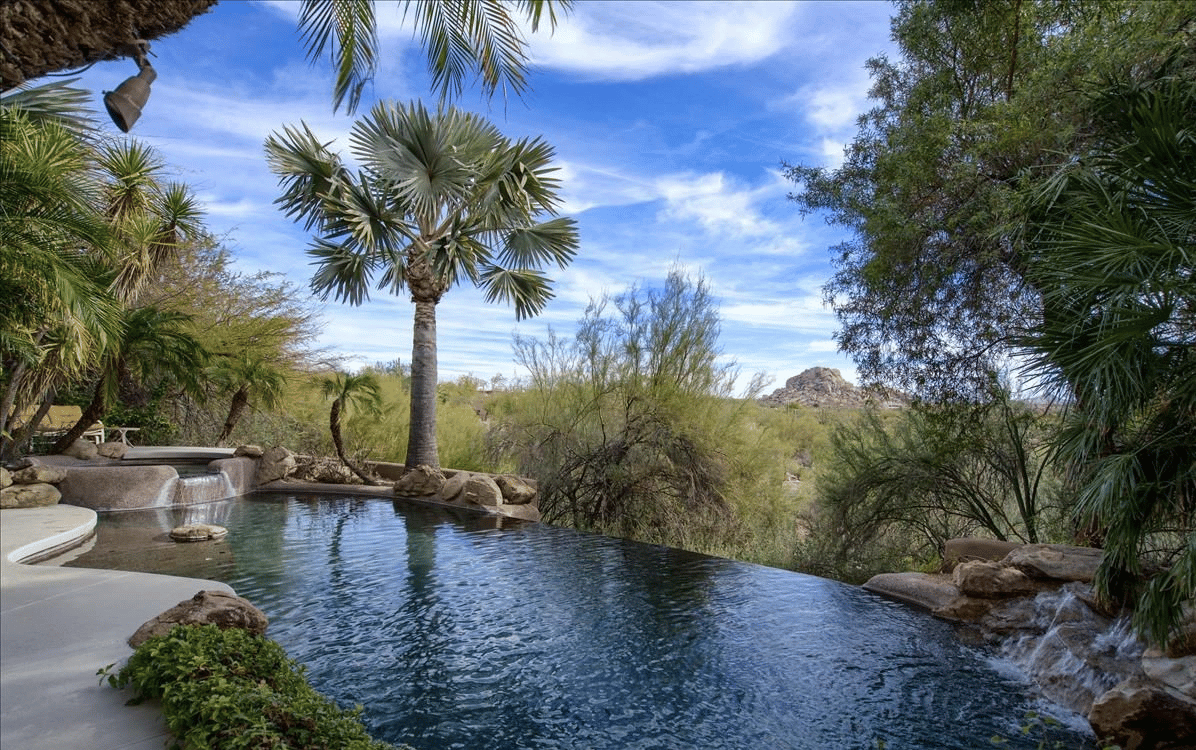
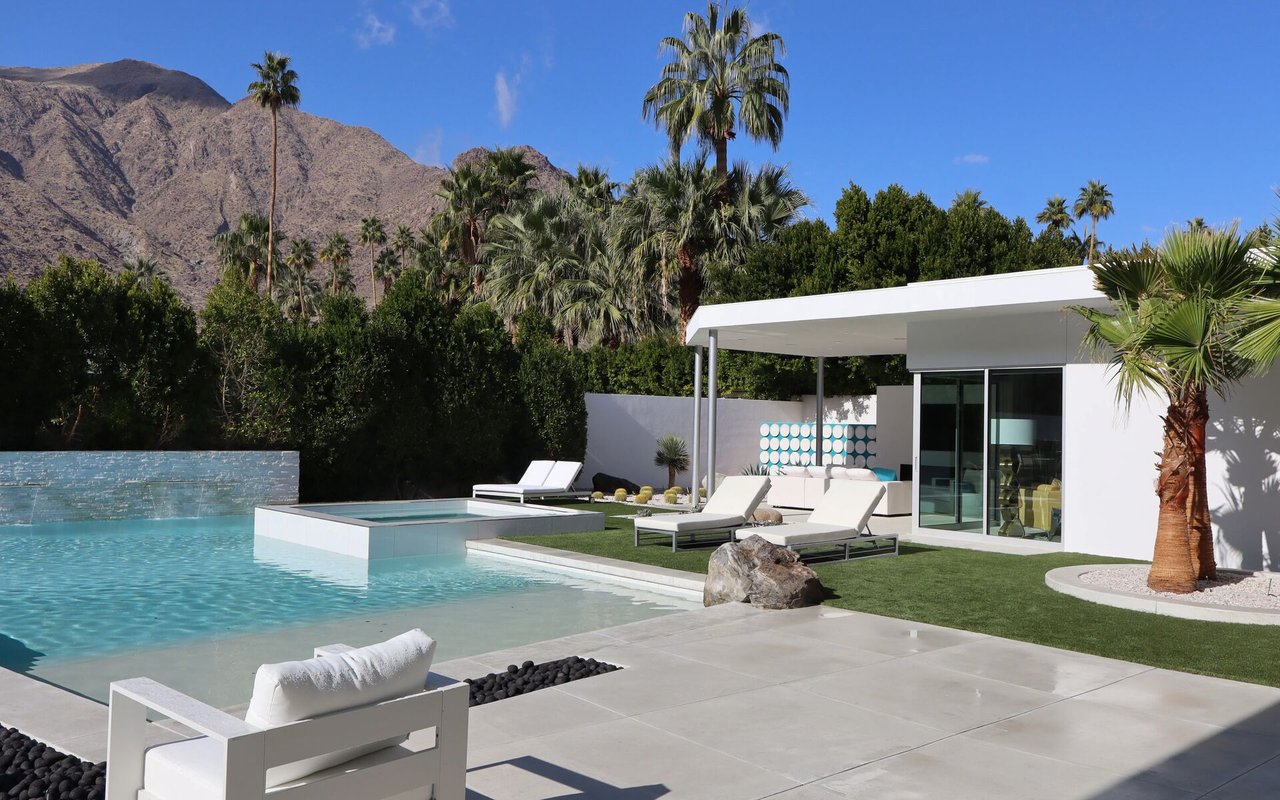
Architecture ranges from Southwestern and regional desert forms to contemporary hillside homes emphasizing natural materials, low profiles, and integration with terrain. Many residences are custom or semi-custom, designed to sit lightly on the land, with an emphasis on terraces, glazing, and outdoor living oriented toward desert and mountain views rather than street presence.
Lifestyle & Daily Experience
Life in Carefree is quiet, deliberate, and landscape-driven. Residents value privacy, open space, and the ability to engage directly with the desert through hiking, walking, and outdoor living. Daily routines are typically home-centered, with minimal through traffic and limited commercial intrusion reinforcing a sense of retreat.
The pace here is slower than in Scottsdale or Phoenix, appealing to those who prioritize calm, scenery, and separation over immediacy or walkability.
Restaurants, Retail & Everyday Conveniences
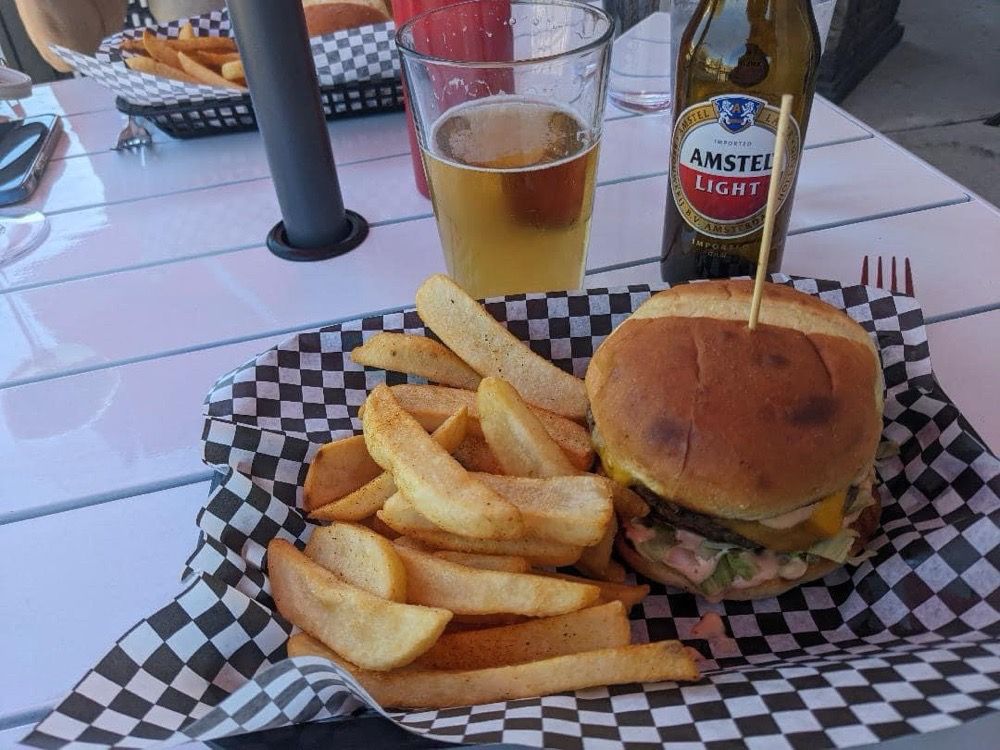
Carefree offers a small, locally oriented town center with restaurants, cafés, and basic services that support day-to-day needs. Expanded dining, shopping, and medical services are accessed via nearby Scottsdale corridors, allowing residents to balance local engagement with broader regional convenience when desired.
Real Estate Overview
Real estate in Carefree is defined by site value, elevation, and preservation alignment. Properties vary widely in size, orientation, and architectural approach, with value driven by views, privacy, and how successfully a home engages its setting.
Buyers often evaluate homes here as long-term holdings, considering land characteristics, buildability, and compatibility with preservation standards alongside interior features.
What Buyers Should Know*
-
Elevation and orientation significantly affect views, exposure, and daily experience.
-
Preservation guidelines influence renovation and expansion possibilities.
-
Many properties prioritize terraces and view-oriented outdoor spaces over traditional yards.
-
Ownership here favors buyers comfortable with lower density and site-specific considerations.
What Sellers Should Know
-
Buyers respond to clarity around site placement, views, and architectural intent.
-
Presentation should emphasize connection to landscape and outdoor living.
-
Over-improvement is less effective than thoughtful refinement aligned with the desert setting.
-
Positioning should reinforce Carefree’s distinction from denser Scottsdale communities.
Notable Site Variation
Within Carefree, elevation changes and parcel configuration create meaningful variation between properties. Homes positioned higher often capture broader desert and mountain views, while lower-elevation sites may emphasize accessibility and shelter. These distinctions influence buyer alignment and valuation.
*Cave Creek vs. Carefree — Understanding the Difference
Although often grouped together due to proximity, Cave Creek and Carefree offer meaningfully different residential experiences shaped by land use, development patterns, and daily rhythm.
Cave Creek is defined by larger parcels, minimal subdivision, and a more rural, unstructured environment. Homes are widely dispersed, zoning is flexible, and ownership favors autonomy, equestrian use, and adaptation over time. Daily life is shaped by land and landscape rather than neighborhood systems.
Carefree is more compact and deliberately planned, with residential areas organized around paved roads, utilities, and town infrastructure. Homes typically sit on smaller parcels, and the overall experience emphasizes order, ease of access, and proximity to local services while maintaining a quiet desert setting.
In practice:
-
Buyers seeking space, flexibility, and rural independence often align with Cave Creek.
-
Buyers prioritizing structure, convenience, and a contained desert town tend to prefer Carefree.
Understanding this distinction helps buyers and sellers align expectations around land use, governance, and long-term livability.
Considering Carefree as part of a long-term real estate strategy? We provide clear guidance on site evaluation, preservation considerations, and how desert settings translate into livability and lasting value.