Neighborhood Character & Architectural DNA
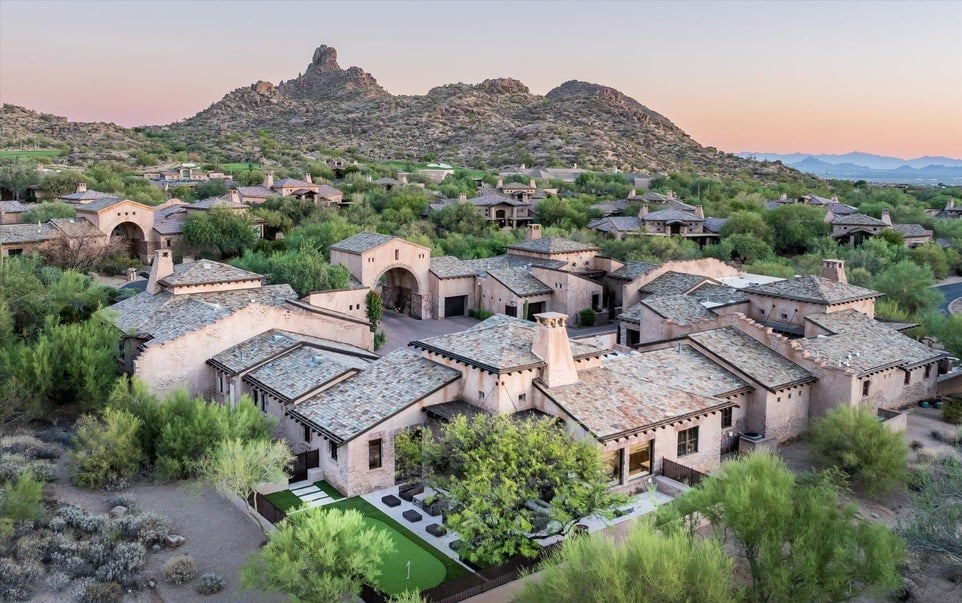
Estancia is shaped first by terrain, preservation, and architectural discipline. Homes are positioned along the foothills and slopes of Pinnacle Peak, with siting decisions driven by elevation, view corridors, and integration with the surrounding Sonoran Desert. Development density is intentionally low, reinforcing a sense of separation and continuity across the landscape.
Architecture is predominantly custom and contemporary in spirit, though varied in expression. Designs emphasize restrained massing, material continuity, and strong indoor–outdoor relationships rather than stylistic excess. Architectural guidelines and review processes play a central role in maintaining cohesion, influencing height, rooflines, exterior materials, and how structures engage the land. The result is a built environment where individual homes feel distinct yet clearly part of a unified whole.
Lifestyle & Daily Experience
Life in Estancia is quiet, private, and intentionally removed from commercial density. Guard-gated access and internal roadways limit through traffic, creating a residential rhythm defined by outdoor engagement and home-centered living.
Residents often structure daily routines around the desert environment — walking, hiking, time spent on terraces, and seasonal outdoor use. Engagement with broader Scottsdale amenities is deliberate rather than incidental, reinforcing Estancia’s identity as a retreat rather than a pass-through neighborhood.
Restaurants, Retail & Everyday Conveniences
Estancia itself remains strictly residential, but residents benefit from proximity to North Scottsdale dining, retail, and services along major corridors. Grocery, healthcare, and destination restaurants are easily accessible by car, allowing homeowners to maintain privacy while still enjoying convenient access to curated amenities when desired.
Real Estate Overview
Real estate in Estancia is defined by site placement, elevation, and architectural intent rather than uniform housing stock. Homes vary widely in size and layout, but value is consistently influenced by orientation, privacy, and relationship to preserved land.
Buyers evaluate properties here as complete site compositions — considering build quality, view protection, grading, and long-term compatibility with architectural guidelines. Ownership tends to reflect long-term commitment rather than short-term turnover, reinforcing stability throughout the community.
What Buyers Should Know
-
Elevation and exposure materially affect views, privacy, and climate.
-
Architectural review standards influence renovation and expansion decisions.
-
Lot orientation and proximity to preserved desert are key value drivers.
-
Internal distances and access patterns shape daily routines.
-
Estancia favors buyers comfortable with governance, restraint, and site-specific considerations.
What Sellers Should Know
-
Buyers respond to clarity around site logic, architectural intent, and view orientation.
-
Presentation should emphasize how the home engages its surroundings rather than finishes alone.
-
Over-improvement is less effective than thoughtful refinement aligned with Estancia’s design standards.
-
Proper positioning requires understanding micro-location within the community.
Notable Site Variation
Within Estancia, meaningful variation exists by elevation, slope, and adjacency to preserved land. Homes closer to Pinnacle Peak often emphasize seclusion and terrain integration, while others prioritize broader desert or city views. These distinctions play a significant role in buyer alignment and valuation.
Considering Estancia as part of a long-term real estate strategy? We provide clear guidance on site evaluation, architectural positioning, and how desert foothill settings translate into livability and lasting value.