Address
4222 N Marshall Way
Scottsdale AZ 85251
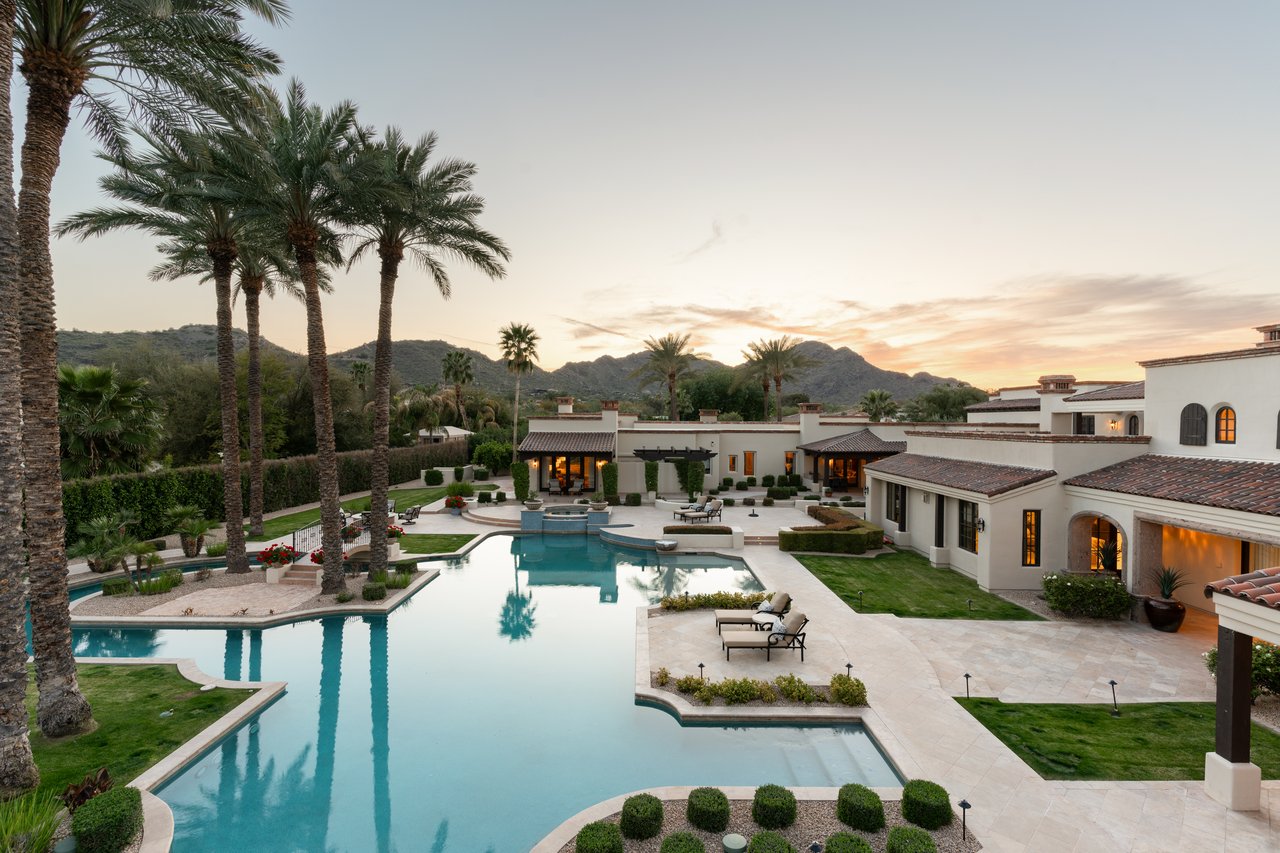
Paradise Valley is a single-purpose residential municipality. No commercial corridors. No density pressure. Every home on a minimum one-acre lot. The McDowell and Camelback ranges frame the skyline from nearly every vantage point, and resort properties from Four Seasons, Sanctuary, and Mountain Shadows integrate quietly into a neighborhood fabric that has remained intentionally unchanged for decades. For buyers, that means a level of permanence that most luxury markets cannot offer. For sellers, it means your home competes in a market where land position, view quality, and design integrity drive value in ways that require interpretation, not just comparable analysis. This guide covers both sides of that equation.
Paradise Valley has no reliable price-per-square-foot formula.
Two homes on the same street, built in the same decade, can be separated by $2 million or more based on factors that do not appear in a standard MLS listing. Understanding these factors is the foundation of sound decision-making on either side of a transaction.
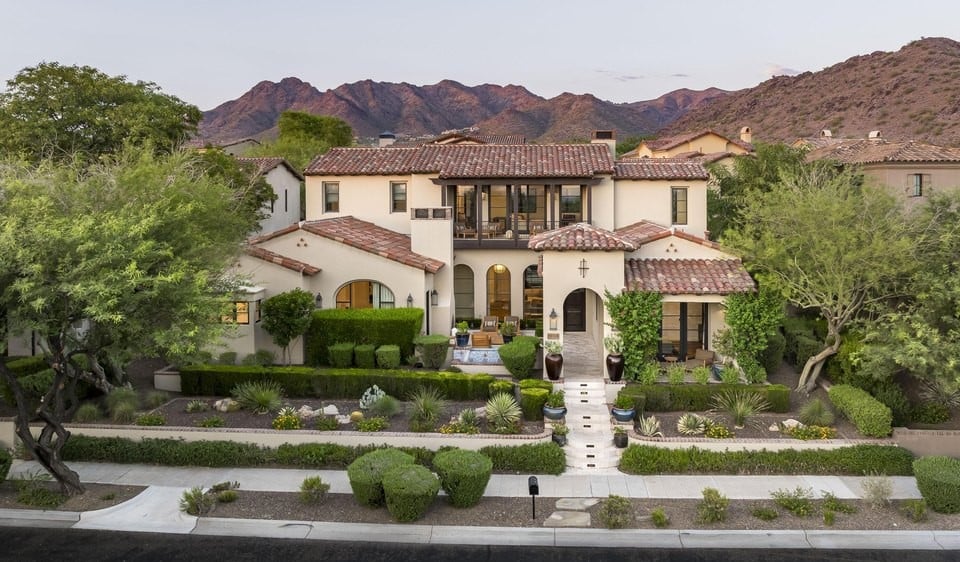
Hillside lots with unobstructed mountain or city light views carry a consistent premium, often 15 to 30 percent above comparable flat-lot properties. The direction of the view matters: western-facing sunset views over the valley floor have historically commanded stronger pricing than eastern exposures. Views that require no neighbor easements to remain unobstructed are worth more than those dependent on adjacent land remaining undeveloped.
Southern and southeastern rear yard orientations allow for comfortable outdoor living most of the year. Deep lots with street setback feel more private and photograph better. Irregularly shaped lots or those adjacent to drainage easements often trade at a discount that buyers may not initially register when reviewing listings online.
Where architecture and interior design work together with a unified vision, values are consistently stronger. Homes renovated incrementally without a governing design logic read as unresolved to buyers at this level, and they discount accordingly. Contemporary homes with clean lines, indoor-outdoor connectivity, and high-quality material selections have seen the strongest appreciation over the past decade.
An undersized or poorly positioned pool relative to lot size and home square footage registers as a deferred cost rather than an asset. Outdoor kitchens, covered ramadas, and resort-scale landscaping are expected at higher price points. Their absence does not simply reduce the sale price; it creates buyer hesitation that can stall a transaction.
Most agents will list your home. We prepare it first. The distinction shows in the outcome.
Susan Solliday and Jennifer Vatistas hold NCIDQ certification, the highest credential in professional interior design, in addition to their real estate licenses. That means when we walk through your home before listing, we are assessing it the same way a design-literate buyer will: through the lens of finish quality, spatial flow, material coherence, and how the home will read in photography.
Our preparation process identifies what to address, what to invest in, and what to leave alone. Not every improvement returns its cost. The goal is not to renovate a home for sale. The goal is to eliminate the discount triggers buyers use as negotiating leverage and to present the home at the strongest honest version of itself.
Schedule a preparation consultation before you decide to list. There is no obligation, and the conversation will give you a clear picture of where your home stands and what it would take to bring it to market at its highest value.
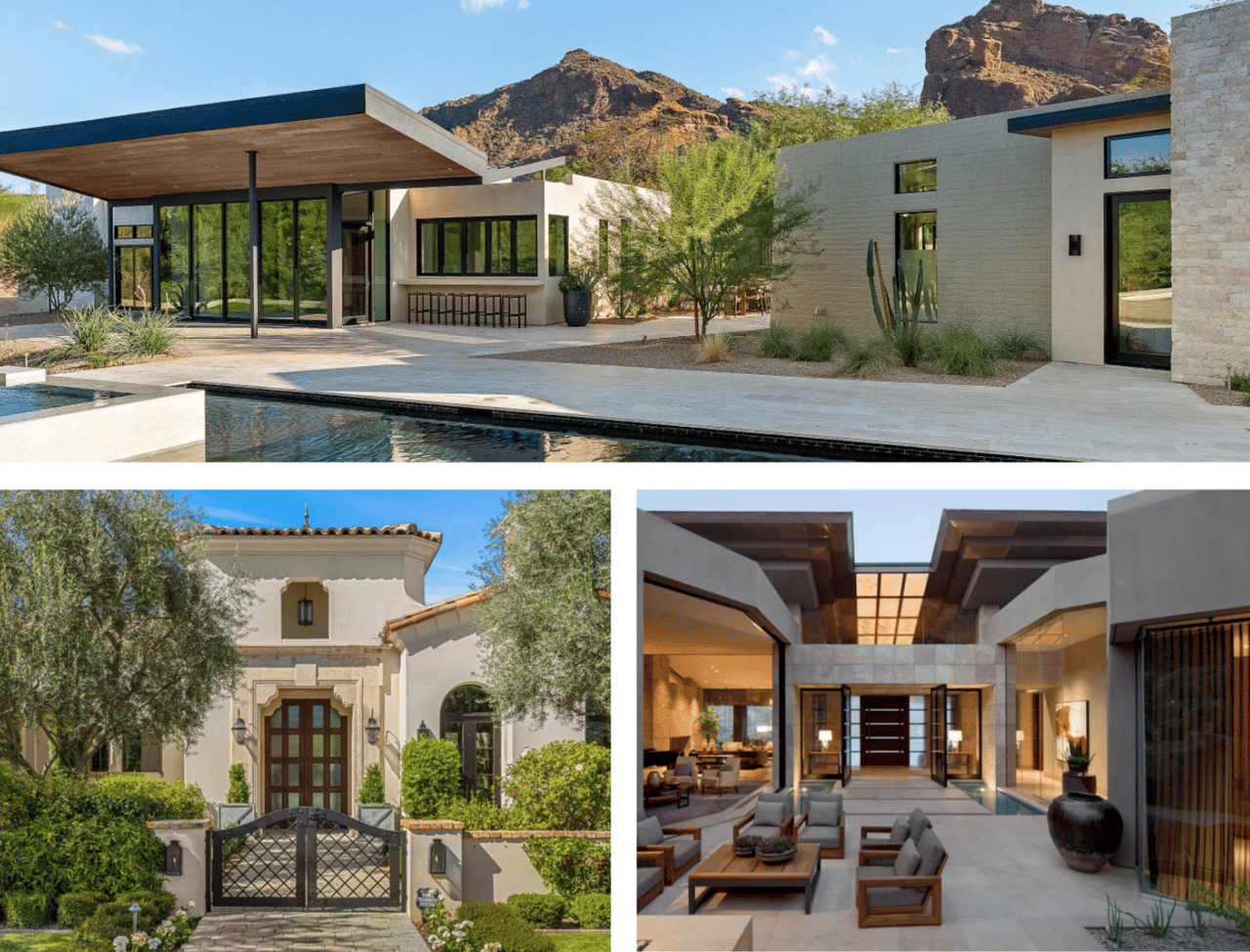
Contemporary and Modern: The dominant direction for new construction and significant renovation over the past decade. Characterized by flat or low-slope rooflines, large glass planes, and indoor-outdoor continuity. Strong demand from California transplants, technology sector buyers, and design-oriented clients.
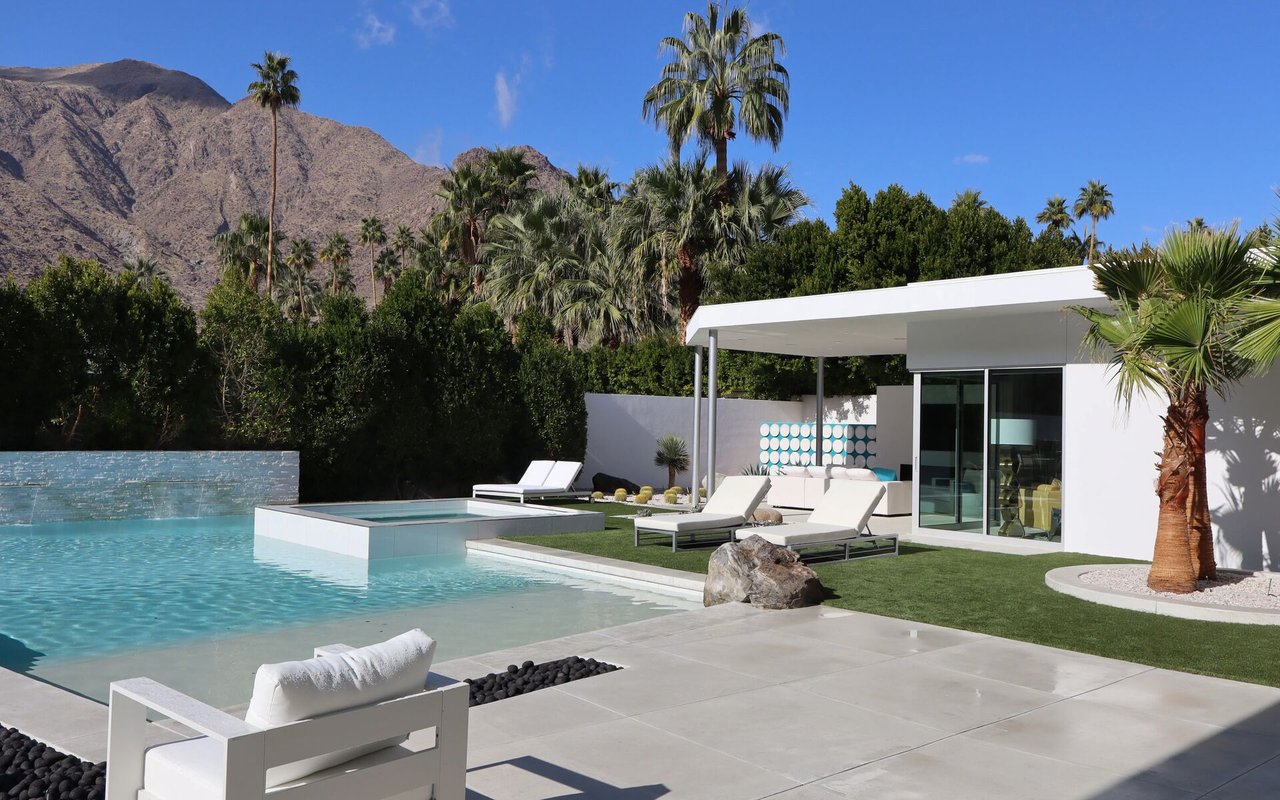
Mid-Century Modern: A collector's market with its own pricing logic. Homes with architect attribution (Al Beadle, Ralph Haver, Blaine Drake) trade on provenance as much as condition. Buyers in this category are knowledgeable and specific.
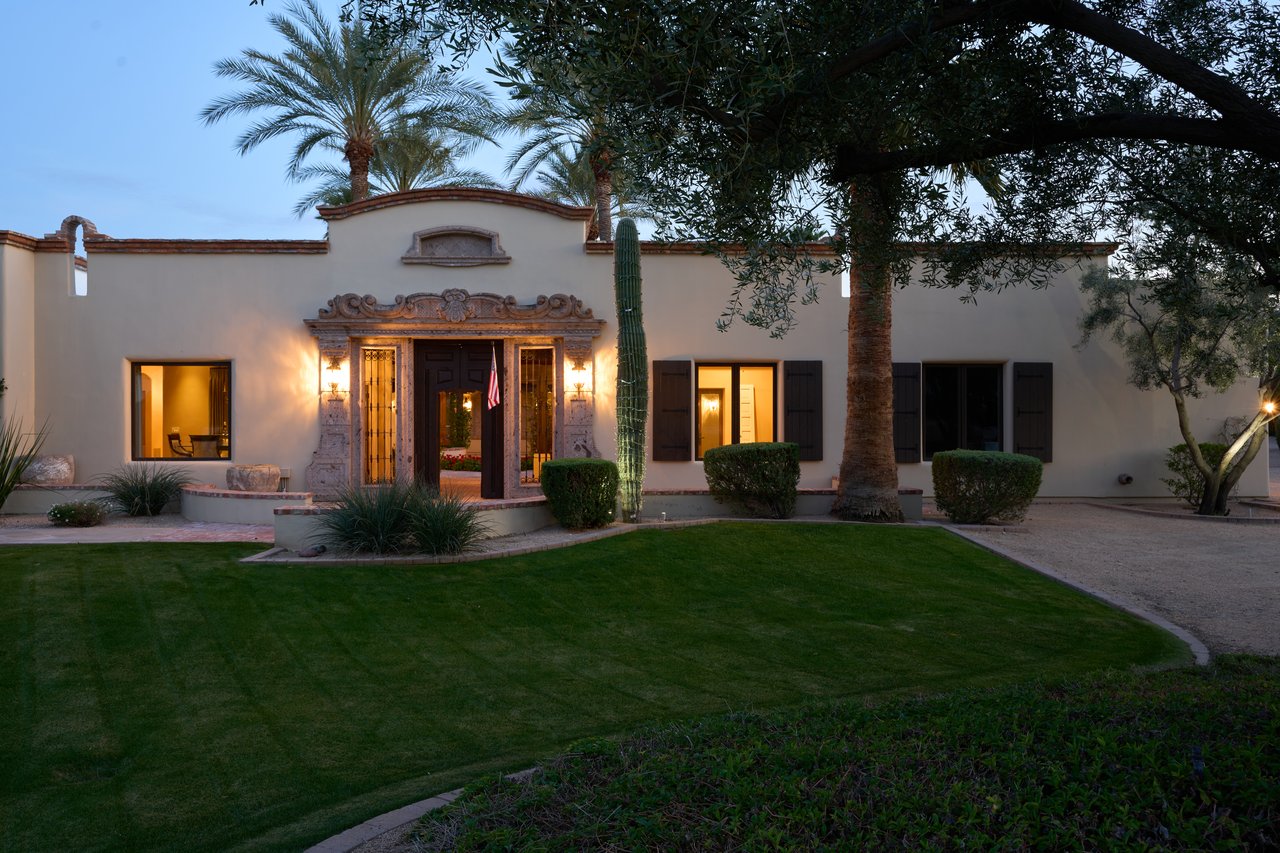
Mediterranean and Spanish Colonial: A consistent segment of the market for buyers who prefer traditional room configurations and a clear delineation between indoor and outdoor space. Older construction in this style often benefits most from targeted preparation investment before listing.
Transitional: The largest segment by volume, comprising homes that blend traditional massing with updated finishes and more open plans. The quality range is wide, and preparation investment in this category typically produces the most measurable return.
The town's structural constraints, including no commercial development, one-acre minimum lots, and a stable governance environment, have historically insulated it from the volatility seen in adjacent markets. The strongest appreciation has been in view properties, hillside lots, and homes with design integrity. Real estate at this price point is illiquid, and holding period matters.
Because price per square foot is not how this market works. Two homes at 4,500 square feet can be separated by more than $1.5 million if one sits on a hillside lot with an unobstructed mountain view and the other is on a flat interior lot with standard orientation. The numbers require interpretation, not just comparison.
For a specific buyer, yes. Paradise Valley offers something North Scottsdale does not: a residential-only environment with no commercial adjacency, no density pressure, and a quieter civic character. Buyers who have owned in both markets consistently describe Paradise Valley as the one they stay in.
Presentation and pricing alignment. Homes that are well prepared, accurately priced, and launched with professional photography and a clear narrative typically sell in a fraction of the time of comparable listings that enter the market without that foundation. Days-on-market history is something sophisticated buyers read carefully, and a listing that sits accumulates a stigma that is difficult to reverse.
Schedule a preparation consultation before you decide. We assess every home before we take it to market. That conversation will give you a clear picture of what, if anything, needs to happen before listing, what realistic pricing looks like, and how buyers are likely to respond. There is no obligation.
Choosing a neighborhood in Paradise Valley is as much about what you are optimizing for as it is about location. Privacy, view position, architectural character, school proximity, and long-term appreciation all pull in different directions depending on the parcel. We help buyers work through that framework before they start scheduling showings.
Luxe Client Group is not a standard real estate team. Susan Solliday and Jennifer Vatistas hold NCIDQ certification alongside their real estate licenses, a combination held by almost no one else practicing in this market. That credential is the reason our listing preparation process is different from what you will find elsewhere: we do not hire a stager and move on. We assess your home as designers and as agents, and we make recommendations grounded in how buyers at this price point actually evaluate what they see. Our team has advised over $101 million in combined sales across Scottsdale, Paradise Valley, and Central Phoenix, the markets where design and real estate intersect most directly and where our approach produces the clearest results. If you are a buyer, we will show you how to read a market that requires interpretation, not just search filters. If you are a seller, we will tell you honestly what your home needs and what it does not. Either way, the conversation is worth having.